
Cap’n Perkins called me after playing Oblivion one evening having thought through three general manners of dealing with a health system that games have. They are as follows:
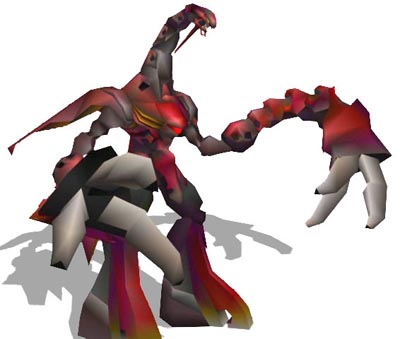 Boss Mode
What this mode gives you is a sense of the epic. Fighting dragons, huge robots, an archmage from aeons past, a prince of demons, et cetera. If you look at the picture provided, many a Final Fantasy VII fan can tell you the ways to beat the weapon bosses, which required certain tactics in order to successfully beat them. Notably, Shadow of the Colossus is nothing but these fights, cutting out the fluff of weaker enemies.
This is the model most games have until a boss fight. The player is given a feeling of having slaughtered an entire army and being a tireless champion of whatever cause the game has you pursuing (in fact, this is causing some concern over Diablo 3 with the disappearing of corpses over time).
Of course, Oblivion was the catalyst for this thinking, though Dungeons & Dragons also can play off this model. Needless to say, this one requires a little more thought than the previous two models. Another way to look at this is PVP, though there you are actually fighting another human player, not just an AI. This system means that not only does the enemy have access to all that you do, but that you also have this advantage.
Here we also see a different character reaction and knowledge. To a certain extent, metagaming helps by allowing one to acknowledge what was just cast, what ability was just used, et cetera. Yet, we do not necessarily get the epic fight feel of fighting a boss, nor do we feel as if we’re wading through an army. Instead, I’d venture to say there is a certain sense of accomplishment due to knowledge.
I say certain sense because I realize all of these modes gives some sense of said accomplishment. What I wish to examine next is exactly what we are gaining from these models in both game and player terms.


 Vorpal Bunny Ranch
The ‘on par’ game style also creates another type of fighting situation, that of a duel style of combat.While dungeon crawling in Oblivion, because the foes are mostly leveled to you and have full armor, weapons and magic to match your own and instant reaction time in strategy implementation, it does indeed come down to basic meta-game strategy.Pulling aggro on one to two enemies at a time tops you then balance the block/blade/cast dance while angling to protect your back until you can drop a single foe and then go on the offensive.Now that I’ve advanced through the terrible teens as far as leveling is concerned this has proven to be a very effective and rewarding style of play and does offer an accuracy other brawlers lack.Of course the instant reaction time of the computer is mostly offset by the ability to pull up your inventory screen mid-battle and quaff some potions without delay, even switching gear without blinking.