
Raining Justice

Taking Games Seriously, Making Game Seriously: This month’s Round Table challenges you to design a game that deals with a social issue that personally troubles you. The recent months have seen controversy sweep through the video game industry. Whether people are objecting to the use of imagery widely considered to evoke racial stereotypes, or to the gameplay based on violent sexual crimes, or to the fact that anyone would complain about either topic–the discussion has been fierce. This month, contributors to the Round Table are invited to design a game that focuses on racism, rape, domestic violence, cruelty to animals, genocide, or any other serious, and potentially hot-button, topic.

The Ace Attorney series works on a few premises: you are in a courtroom dissecting testimonies, searching for inconsistencies and pointing out disparities through evidence or questioning; between court days you are investigating the case, picking up clues, and questioning various people; you, as the defending attorney (so far) must prove your client not guilty.

In the first game, Maya, your partner, says the following, “Sometimes I feel like it’s us on trial instead of our clients.” This is very true in a meta-gaming sense, it is your success or failure that determines the outcome. The defendant is always innocent, you just have to prove it. Them being convicted is your failure, not their guilt.

Given the emphasis of this system, I figured I would like to build a game off such a system. Victims of sexual abuse often don’t report their abuse, male and female. If one can get past the social stigma and the possible problems with reporting it to law enforcement agencies, one has the opportunity to deal with it in the court system. Supposedly, justice is blind, wherein lies some of the problem, which is why a game system such as this works rather well.

Considering the topics of sexual abuse and discussing the details of such, this is an AO game, which means it would likely never ever be seen outside of a Flash game (which would be fine for this premise). Which is not to say that this would be overtly gruesome; the reason I like basing the idea of this game off the same model as the Ace Attorney series because it has a lot of humor in it. The same would be applied here through characterization and dialogue. The title would be Raining Justice, an allusion to RAINN.

As the defending attorney, your client would be the person being accused of the sexual abuse, be it rape or molestation. What this means is that you would spend the game deconstructing the charges at hand. When in court, this means dealing with an already stressed and distraught witness, whom you would treat as every other witness before such (more on this later).

Between cases in the original series, there is little paint thrown over the fact that one is essentially breaking, entering, and snooping in places one is not wanted and which may be illegal. The same would apply here, though the privacy violated is that of the supposed victim.

I say supposed victim because the game would follow the same trajectory, failure is your client being found guilty–giving the impression that you can prove your client not guilty (not to be confused with innocent) due to some glitch in the system, and this is your goal, whatever the cost.

The difficulty is presenting this in a way that does not make a player immediately switch off. Using the grossly broad and over-the-top characterizations as Ace Attorney would help here. My idea would be to have the only human representations be both the defending attorney, whom you are controlling, and continually longer glimpses from the victim. To start, the victim would be so quiet it would be difficult to get much of a reaction at all.

The end goal would then be that of the win: the not guilty verdict. The steps to get there would include invading the privacy of the victim, ridiculing him or her in court, and most likely finding a small technicality.

As it stands, the current court system does not know how to effectively handle victims of sexual abuse, often painting them with a broad stroke as fully complicit in the abuse. The game would follow in this role, making you seek to find the minutest detail to warp out of context–the absurdity of these technicalities would highlight just how vicious the court system is to victims of sexual abuse–a topic we don’t like discussing at the best of times, and without some yelling going on somewhere.

While the trial would proceed, the already reticent victim would be given more and more humanization, starting to display believable emotional depth in contrast with the bombast of everyone else in the circus that the courtroom holds. The aim of the game is to remind the player that victims are human beings, not a statistic. Would the player continue playing the game in seeking to disprove the facts?

That one would be more difficult to gauge, but would be telling in how we deal with the issue currently. While I debated making this more abstract as other entries have done, I am not sure I could see myself divorcing the human aspect from this particular issue. There would of course be other trials that also show the problems of how we define rape and how it gets used in court systems (issues involving alcohol), but this is the one on which I wished to focus.

Please visit the Blogs of the Round Table’s <a title=”Blogs of the Round Table” href=”http://corvus.zakelro.com/round-table/”>main hall</a> for links to all entries.

Tagged | 2 Comments

Quixotic Rambling

At this point in my life, time is a nebulous concept. What seems like a week ago for me may well have been a month in the past (or thinking I had written my first Gayble post last week when in reality it’s been ten days). The measurement of how I perceive a day is present in the fact that I started writing these particular words at 3.40 in the AM. For this reason, my blogging has been rather off, but rather than wait until I finally finish Persona 3 or Assassin’s Creed (the two games on which I’m spending most of my gaming time at the moment), I decided to just write. As a person who paid a good portion of his tuition by merit of a creative writing scholarship, I’ve found the best cure for the fear of writing is to just write anyway.

Forgive me for what follows, it’s a mesh of various thoughts that have been occurring to me of late. There is no central, cohesive argument–this is an exercise that will string from one thought to the next.

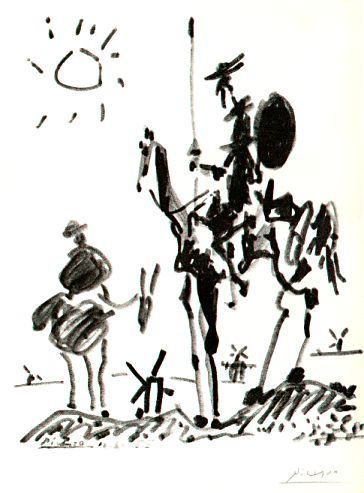
My gaming has become secondary to my reading once again. Over the weekend I made a flippant Tweet likening Don Quixote to a jRPG. The main impetus for this is the fact that I have owned this copy of the book since the summer of 2001. That was the summer I spent at Tennessee’s Governor’s School for the Humanities, and one of the courses I took was titled something akin to the Touchstone Classics of the Literary world (it seemed lofty at the time). Most of our time was actually spent discussing what literature was and whether these were really classics–what defined them against others of their time? We didn’t read all of Don Quixote, only about the first hundred pages.

It has remained on my various bookshelves ever since, a reminder that I have yet to read all those pages. Looking at my game library, the games that I have not played to completion? Most of those, unsurprisingly, are jRPGs. The length is what seems daunting, and the questioning of whether or not the time spent is worth the supposed reward of enjoyment.

Reading Don Quixote, there have been a number of times I’ve guffawed. When the knight of the rueful figure, later the knight of the lions, attacks a puppet show because he becomes so engrossed he mistakes the Moorish puppets for real Moors attacking a loving couple, tears ended tolling down my eyes as I cackled. The story certainly engages me, but at times it drags and I find myself drudging through, committed to finishing it this time around (page 760 as of last count–it appears Sancho is about to get the governorship of an island). However, the chapters are short enough that even if a particular chapter drags, I read on in hopes that the next will move on to new territory–in a new direction.

Having done a lot of reading and research on the history of knights, particularly in the tradition of the Germanic Minnesänger, I find those parts that talk about the tradition of the old chivlaric tales interesting, but they start becoming repetitive. It does well at displaying Don Quixote’s foolishness and utter devotion to knight-errantry, playing with our concept of reality versus fiction and how the two both function together as well as butt heads, but it doesn’t do much for me after a certain number of times.

This is exactly how I felt about action sequences in Watchmen, the film. Not a fan of Snyder’s work (I like some of his ideas, but find none of them particularly compelling), I could only take so many slow-motion action sequences before I started glancing out of the corner of my eye to find my friend Josh similarly yawning and impatient (neither of us is adverse to lengthy films–just ones that aren’t paced well).

The problem is abundance, something from which many videogames, and not just jRPGs, suffer. On the flipside, we have many action-oriented games that give us some nifty trick that we’ll use to achieve a certain goal, and likely forget about if the obstacle never again presents itself. Is there an achievable, compelling goal to reach between those two?

I enjoy a wide array of games. Glad to plod through decently written text or story heavy games as well as the very simple, hands-off approach of a game that is essentially a rogue-like that tells me nothing but my stats. The way I treat the question, “What types of games do you play?” is the same way I treat the question of, “What type of music do you listen to?” The answer is simply, why limit myself? There is a certain allure to certain types of grinding, but I have yet to actually explore when I enjoy it versus when I find it something intolerable. I’m starting to wonder if it is an equation such as a + x = b + y.

If reading from left to right, a would serve to illustrate what I’ve already experienced. On the right side of the equation, b would serve as my hypothesis of where the game is headed and what I expect to be doing in the game. x and y, respectively, serve as the unknown elements that will obviously be put into my path. x would be elements of which I’m not fully aware now, or whose true meaning lies hidden to me at this particular juncture. y would then serve to inform those events that will happen in the future which I am not expecting, and which cannot inform my opinion of the game until I’ve encountered them and they’ve switched to a.

Gears of War 2 had plenty of y elements in the form of vehicular shooting–a convention I came to realize I’ve never enjoyed. My current playing of Persona 3 has plenty of x moments in terms of making decisions and answering social links’ various questions. I do realize the merit of desiring such in a game–it breaks the monotony. In Gears, this would be cover, shoot, cover shoot, chainsaw, repeat. In Persona 3, this would be going through Tartarus and engaging in rogue-like shenanigans. It offers something I was not expecting based on my own assumptions and experiences (whether that’s in general or game-specific–I’m being very loose in my use of the formula above).

Don Quixote offers such at times as well, intermittently throwing in a frame story that has no direct correlation to the events at hand. It seems Cervantes realized that our own reading would flag if confronted with the same schtick of a madman running foolhardily into different situations. Of course, Cervantes was also writing with a firm tongue placed in cheek, and for comedic value. Among the fastest ways to lose ‘the funny’ is to constantly bombard the audience with joke after joke that relies on the same conventions. This is also why part of the appeal of volume two is that Quixote is actually recognized by people in most places he goes–his madness is no longer just a surprise, but expected.

If we hold the same to be true of game design, how do we both provide those breaks that our minds need in order not to find something tedious, while not detracting too much from the core design and principle of the game itself (or, if doing so, making sure it’s actually engaging and relevant)? What is the gaming (and I mean gaming, not story–though it is possible to make the argument that the two are interchangeable) equivalent of a frame story, or (thinking on theater) a comedic relief in a heavy drama?

Posted in Uncategorized | Tagged | 3 Comments

A Case for Closets

This is part of an on-going series that will concern itself with storytelling as it concerns the queer community. A Case for Closets will put forth some of the issues to consider concerning coming out of the closet, though it is by no means exhaustive.

We as a society have created a system whereby there exists a distinction between identifying one’s own sexuality and presenting it. When we do present it, we’ve come to label it coming out of the closet. When happening involuntarily, it becomes passive, the person is not actively seeking this: Denis was outed. In many ways, sexuality has come to be linked to performance; one is free to ‘act more gay’ upon coming out of the closet.

In gay media there exist a lot of coming out stories. As I mentioned in my last post, there are as many different coming out stories as there are people who can tell them. In 1979 Vivienne Cass presented a model (Cass Identity Model) for treating gay people as normal in society, rather than an aberration of society. The six stages in sequential order are: Confusion, Comparison, Tolerance, Acceptance, Pride, and Synthesis.

This model has its problems, however. The final stage assumes that one must be integrated into the gay community and create social spheres primarily in that realm. It is also a linear format that would seem to suggest a maladjusted individual if this is not the order in which an identity is mapped. This model also does not take into account anything but sexuality, existing in a world that only seeks to identify itself through sexuality. Finally, it does not suggest anything for bisexuality, which has its own spectrum of identification and acceptance based on how we as a society treat it, particularly since the LGBT community can be strangely biphobic. In other words? The Cass Identity Model is a bit too specific.

Yet, in most coming out media, it seems this model is rather closely followed. My first suggestion? It can be a useful guideline for its overarching themes concerning identity, but should not be seen as a bullet-point list of topics on which to hit every time.

If one addresses a coming out story, one should decide whether or not one wishes to be more specific or abstract in the approach. In the case of the former, this will usually assume that the character’s coming out is something we, as consumers, will experience. Otherwise, it could merely be something to which can be alluded, or something that was likely a nonevent or had small impact (i.e. coming out to an accepting world, society, community, etc.).

However, to include a character does not mean that we have to directly focus on that character’s coming out unless it impacts the story itself. What I would caution is that it is still something that should be taken into consideration; crafting any character should take into account significant events in that character’s history, as it pertains to the story itself and the personality one is trying to craft.

Considering the personal stance behind coming out, it serves as a moment of revelation and defiance. The tone of this defiance is marked by the method in which one steps out of the closet (i.e. writing a letter to people, gathering important persons to tell, etc.). This goes a long way in describing who this person is and how he or she has dealt with communicating a difficult subject to a specific community. It is also important to note to whom this person has come out, and if he or she remains closeted to certain persons.

Then there is the other point to consider. Was this person outed? Was he or she thrust into a situation not actively sought? In this case, the character’s handling of the situation gives us an understanding of how the character handles duress. Not only is there potential opposition from those that would not be comfortable with said outing, but there is the possibility of animosity that may occur between the character and the ‘outer.’

In both cases there is a potential falling out and one must take into consideration the character’s methods of dealing with this. In the Cass Identity Model, this may well lead to secreting one’s self away in a community based around this sexuality. Unless a game wishes to be labeled in a niche category, this is likely not the path to be taken for an overall game, but perhaps a sidequest. It does provide for a conflict of interest if the game’s conflict does not stem within that community itself. Which is where the suggestion would come in that to focus on a gay character and to consider coming out, one does not have to make it entirely about ‘gay life’ or the ‘gay community.’

While they should certainly be factors, gay issues do not have to be the center of that character’s social interactions and inform everything the character does. The moment the character’s only personality trait is his or her sexuality, something has been miscommunicated. Sexuality is not a personality trait. What is a personality trait? Societal expectations and an insular culture which seeks to sustain itself and create its own traditions, which one accepts or rejects.

If one does go the route of showing the character in the gay community or interacting with it post-outing, it brings into question what that character obtains from this interaction. Is it a community? Is it a safe space? Does the new social circle have a romantic interest? These are questions to contemplate as to what the character sought to gain by enfolding his or herself into the gay community. They are not mutually exclusive, either, but can be present in varying levels.

The film that caused me to reflect on most of the coming out stories I saw was the Canadian film C.R.A.Z.Y. In this story, we see the character struggle with his identity based on his interactions with his family and the cultural influences of his time (David Bowie, Bruce Lee, pot, etc.). In his search to find out who he is he does travel and we do see the character interact with gay clubs in a foreign land. However, the central motif of the story remains that of his family (the title comes from the first initial of all five sons), around and against whom he defines himself.

His sexuality is a factor, especially the fear of it, but it does not seek to inform his decisions. Through the course of the film he deals with his own identity as a person, eventually adding, bit by bit, the ingredients concerning his sexuality. The ultimate triumph is displayed in the last scene, years later. At this point he is able to discuss his sexuality with his father, who sent him to therapy to make sure he could be cured. By the end of the film, we are left with a fully developed character who has grown into himself and has not only identified who he is as a person (note, not a gay male), but has been able to proclaim such to those that matter most.

However, people are subject to change, depending on other, later significant events in one’s life. To assume that a person is the exact same as the moment when he or she stepped out of the closet is to deny that the person has progressed in any fashion. People are able to evolve their own methods and thoughts, and unless one is making a statement, stagnant characters are not particularly compelling as anything but one-note stereotypes or symbols. Instead, a character’s coming out should serve as a base from which the character has moved.

Tagged , | 2 Comments

Gayble

I want to add a new tag–a new series of posts, not in direct succession of each other.

Fanny Fridays
, a concept I had a while ago, is something I abandoned because I realized (back when I was posting more frequently) that I was delaying posts just to post them on a specific day. Considering how often my interest is piqued by gender and sex, it began to feel more like a hindrance and one that wasn’t conducive to my own writing.

This tag I wish to add will be more focused and not tied to a single day.

Based loosely on the concept of a television show’s writer’s bible, I wish to write a series of posts giving suggestions of ways to include gay characters. Some of the backlash on Resident Evil 5 has been that this is why games don’t include black characters. It seems an argument full of folly, and hardly conducive to actual discussion. It does not address the larger issues at hand.


The idea occurred to me some months ago while watching a coming out/of age Canadian film that actually spoke to me, a person who has consumed enough coming out literature and film to have grown particularly jaded of the genre’s predictability. Analyzing it more closely, I came to realize why it did so and wrote about it in a personal journal. This then means that what I will be writing will be applicable to storytelling more broadly, not just to videogames.

Since many videogames do include a story, I feel this is applicable in terms of not only scripted-out tales, but those that allow more player input. Part of the series would also be dissecting and examining how examples from different media have worked, seeking to use games when applicable (though the examples there are rather thin). When using other media, I would hope to then examine how to implement it in games. Different media, different strengths, different possibilities, different hurdles.

Here’s what I do not wish this series to be: myself dictating a strict set of terms that draws a line. A common theme among my posts will likely be that sexuality in itself does not define all gay people, and when it does, there is something further to be said about the world around those characters (after all, many of these worlds videogames inhabit are not our own–are not fed by our history). That being said, there is still a wide range of possibilities along that spectrum of performance. No, I would prefer this series to be an engagement.

Having been the only out person in my high school and among only a handful at Wabash College, I have often been placed in the position of having to explain everything gay. I can’t, and it was a mantle I would often take on with a sense of discomfort. It’s not within my experience to relate all experiences. Hence engagement–I want you to challenge my own assumptions, add your own thoughts, and help me create a space and set of guiding principles to consider.

Because of the nature of this series, it will also include where sexuality intersects with race, gender, class, sex, et cetera. As a firm believer that one cannot simply extricate one of these factors from all the others, it will be beneficial to have as many different voices as possible helping me write this.

I will start in the next few days with the concept of coming out of the closet, and examine why certain stories succeed and others do not (also why this depends on the person experiencing it). If you have any suggestions or topics you hope to see me cover, please leave them.

N.B. I do not expect I will be serious all the time, and hope to not be didactic in my approach to this. For this reason, Cap’n Perkins suggested I use the term Gayble to merge the concept of homosexuality and the writer’s bible with some measure of silliness. I agreed.

Tagged | 4 Comments

Little (represented) Women

Here there be spoilers.

It all started when running through the innards of the Riftworm. Taking my chainsaw-gun in hand, I tore through tissue as blood spurt back on to the ‘camera’ that was behind me. Slightly bemused by this rather superfluous barrier, I couldn’t help but envision this whole travel as ripping through the worm’s multiple hymen. While I made this comment in an off-hand manner while my roommate watched me, it did not strike me as particularly false, though not wholly true.

Curious at why I felt this, I started noticing a trend: females in this game mainly existed to have violence or the threat of violence visited upon them.

Anya Stroud, the intelligence officer who provides you with various instructions feels less a presence in this game, though she is seen more often–with the stakes supposedly being higher and more breaks in communication occurring due to location. While this time around Jack displays an image of her speaking, her visibility only seems to serve prefacing the last cut-scene in the game.

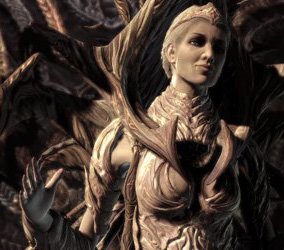
Then comes the queen of the Locust. I’m not sure what I imagined, but a human-looking Locust with greyish skin tone was not on the list. Instead of seeking to other her with grotesque features, she remains othered merely by the fact of her sex. It was slightly disconcerting.

The only previous Locust females we’ve encountered to this point are the Beserkers in the first game, whose blindness and brute strength served as a reminder of the capability of females in nature for physical viciousness. Queens can often be seen as sexualized objects, with the obsession being over their ability to produce heirs or progeny (oftentimes over their capability to rule). While no hint is given as to Locust procreation or how the line of succession in their society works, the queen here is sexualized by her presentation as an almost vamp figure with curves and a mantle that actually seems part of her own body, but could easily be mistaken for regal clothing.

Even Baird and Cole respectively chime in:
“That’s the Locust Queen?”
“I thought she was supposed to be butt-ugly.”

The goal, as her nemesis, is to kill her. This makes sense, though she isn’t presented in the slightest as someone who is physically imposing or serves as a direct threat. Instead, she orders Skorge to attack you as she walks off stage right. No violence is to be visited upon her in this game.

However, prior to this encounter, we have the scene with Maria which rattles Dom. Her only real purpose in the story is to serve as a distraction from the main plotline, with Dom’s focusing on her safety and worrying about physical threats against her. Even in releasing her from her suffering, Dom has to pull a trigger to visit upon her one last act of violence. In the end, she dies a death that is coded to be more meaningful at the same gunpoint that has already laid waste to numerous Locust. Whatever her fate was, this turn in the plot supposedly serves to pierce the tough-guy barrier that the COGs have all donned along with their massive armor. Maria is a weakness, nothing more.

To get at the men, hurt the women. It’s a theme that is certainly not new in warfare, though it serves as propaganda of the sort we expect–demonize the enemy as wanting to kill your wife, sister, daughter. While all the women that the COGs fight are either in positions of power or combatants themselves, it is the fear of violence against one’s own women that is trumpeted as what has to be avoided. In this fashion, Gears seems to reveal a filter of how we are seeing the landscape, which is supported by the hints it keeps giving as to our lack of knowledge of the Locust’s activities and history.

All we ever see of the Locust is their military, whereas we are shown humanity’s own suffering through the Stranded and torn down homes. There even exist flashbacks of what life was before the war with the Locust horde. Given the fact that we do storm their places of living and are given glimpses into their living situations, it is somewhat odd that all we ever see is a culture obsessed with war (as the Locust queen wryly notes is a trait of humanity). The message the game touts is clear: even in some futuristic, other-world setting, females best serve the war effort by playing behind the scenes. Their stake in humanity is a passive one.

At the very end, after a boss battle that served as pointless and the sinking of Jacinto, Marcus suddenly worries about Anya. What we see reflected in his face is the same worry we were to have experienced from Dom’s own expressions. Though there exists little actual conversation between Marcus and Anya that is not professional, his worry about her death among all the others serves as both a warning of a future romance story we may have to endure and the fact that all this fighting is really a propaganda machine. The enemy will break and slaughter your women (though it’s also been doing so to your men). Women, like paintings, are seemingly a high-priced commodity; likewise, their utility is somewhat left up to debate.

Unlike the breaking of Tai, the threat of violence against Maria or Anya is meant to be more poignant due to the fact that the human females in the game are never shown to be capable–they are ‘innocent’ victims. We, as players, never control them, meaning anything they may do to help the war effort exists off-screen. They are not fellow COGs on the battlefield, so their utility is seen as decoration. They exist in cut-scenes and radio transmissions–a mythical unicorn which needs protecting, and is spotted about as frequently.

While it seems to be in agreement with a supply and demand model (women are rarely seen, so their value as a commodity is higher when killed), Gears of War serves as a better reminder that this genre of games is very much stuck in a childlike mentality where girls don’t play with boys. This relegates them to being featured in stories when needed, but very rarely given any actual function beyond damsels in distress.

Tagged , | 10 Comments

Two Cogs in a Gear

Here there be spoilers.

In order to convince us that there exists some talent for storytelling and emotion-pulling at Epic Games, there seems to be more attempt at pulpy substance in Gears of War 2. Within the first hour we hear about Maria and see Dom get noticeably anxious and annoyed at the fact that she has not been found. Unfortunately, the player has no real experience with Maria, and only short cut-scenes and words serve to tell us that there exists a palpable and loving relationship between Dom and Maria. Sure, I’ll buy it–to a point.

Instead, what I found happening with Gears of War 2 is my own interest in the relationship between Dom and Marcus. The first game certainly hints at it: Dom is the one to break Marcus out of his prison, they are almost always together, and the achievements for co-op play make homoerotic jokes about the two. The jokes return, but there exists a deeper exploration of camaraderie, for a number of reasons.

First, while there still exists a squad-based gameplay, there are many more moments that struck me due to it only being Dom and Marcus traipsing through abandoned bases and high-tension moments. Both the first and second game have the exact same amount of people in Delta squad, with the exact same number of deaths. Tai Kaliso is the unbreakable spirit mimicking the loss of a figure of some strength as we saw with Lieutenant Minh Young Kim. We once again have a Carmine brother, and like his brother Anthony, Benjamin is a sniper who lasts about as long as it takes for me to reacquaint myself with his weapon of choice.

The former is supposed to enrage us at the enemy’s cruelty. The latter serves as a running gag of sorts, especially as it heightens the moment when he isn’t killed when we initially think he is.

However, Baird and Cole seem much more ancillary figures this go around, serving much more often as support. Both serve to advance the plot at keypoints, but neither is notably there for the majority of the game. No, the sense upon which the game builds while progressing through the game is that Dom is your partner, and the one on whom you will be relying (sometimes to my chagrin, considering the sometimes brilliant, sometimes insipid AI).

In the first game this sense was hard to instill because we are still learning about all the characters, and have no particular sense of what has passed among them before. There exists some relationship between Dom and Marcus in the first game, but in the second we have the benefit of knowing what they both experienced, together, in a previous title.

Then comes Maria:

When Dom took the pistol and ended the life of the broken shell of a woman who was his wife, I did not feel for her in any capacity beyond her being another victim of the Horde. The transition of his vision from the ideal of his wife to the husk she had become served to make me feel more for Dom, who actually has a voice and character in the game–he’s a character we know, she’s just a myth we have destroyed. What do we know about Maria? She’s Dom’s wife. She, in many ways, is a prop to make us feel for Dom.

In fact, it is Marcus who steps in to break the illusion Dom is placing upon the broken-down Maria he’s holding. The scene vacillates between focusing on Dom and his desperate attempts to explain his failure to save her and Marcus’s own reaction, stony-faced and silent. When the gunshot finally blasts, we’re focused on that face as it pauses, and then continues walking. This cut-scene, married with the gameplay of the squad-based missions, serves to make focus us instead on how Dom and Marcus will deal with this.

As Duncan Fyfe at Hit Self-Destruct notes, they, like sharks, don’t pause because they can’t. They march ever-onward into the enemy’s lair, stalwartly going about their mission. Given the knowledge that they will continue their task, all that matters now is not what was left behind in Maria, because we won’t be given time to explore that, but what still exists in the future. In a brief moment of concern, or what counts as concern for Marcus, Dom is given the option to sneak into the next portion of the game, but Fenix wryly notes that if he were in Dom’s shoes, he’d want to run in blasting–he understands.

The relationship that really matters? The one for which you can earn achievements.

Tagged , | 4 Comments

Redfield Re-worded

I don’t like being judgmental, but somehow, no matter how much I edited and thought about the post I wrote about the Chris Redfield Flash game yesterday, I feel that my tone may have been. If it was, I apologize–that was not my intent.

In fact, in focusing on trying to bring up the subject of male rape and sexual assault, I believe I did somewhat of a disservice and inelegantly gave my true thoughts on the matter of the game at hand.

Here’s attempt two, if you’re willing to read.

What do we do with this game? As I mentioned yesterday, if we look at it as rape (yes, we should), many will cry for it to be censored or shut away. I disagree with that rather vehemently. I believe in free speech, and that includes speech with which I am not comfortable or that might offend me. Rather than censorship, I’d wish to promote engagement and critical thinking, not hiding it or from it.

A few other thoughts to consider is why I wanted to write about this, considering it’s a genre popular in its own right; the main difference that separated it from others being that it was of a male character. I don’t go seeking out such things because I really have no interest in such pornography. Gay Gamer ran the article and I came to realize that Kotaku did as well, so I wished to engage it on a level that I did not see being bandied about on how to consider the game.

However, to take the whole genre of masturbatory aids that this promotes, I wish to look at it further.

First, despite its content with which I am uncomfortable, it is artistic (though the question of whether it is art could be debated well into oblivion) in terms of its presentation. The creator has obviously learned more about Flash and its design as he’s created these projects, and has also managed to become more bold in his line and shadow usage. In terms of usability, which I’ll address farther down, it also is rather ingenious as interactive porn for its ease of use.

The art style itself speaks to further pushing it into a non-reality zone by using a very heavily stylized influence. Blushing cheeks, over-exaggerated features, and speech bubbles all give way to make us realize that this is meant for sport. In no way do I believe the creator had malicious intent, but intent and product can be wholly separate, as the other debate concerning race and Resident Evil 5 has shown.

Second, I find it a useful way to talk about it. There is a line between fantasy and reality, and this plays with that line with its subject matter. As I discussed with a friend last night and has been mentioned in the comments of my last post, here we are also questioning how much of this is a power dynamic, and this is a method of discussing such topics with the visualization and its discussion in a non-real format (which would probably make most uncomfortable enough to not be able to discuss in a rational manner).

In one frame of mind, with what we’re dealing is a dom/sub relationship. Rape fantasy exists, and is controversial in its own right. The difference between rape and rape fantasy and roleplay is that a safe word is usually employed in the latter so that it denotes that this is not actual rape. We’re not given that context in this scenario, and the description would denote such a dynamic does not exist, but the question of being programmed to protest but having an inevitable conclusion based on existence poses a whole new realm of exploration in talks about this topic. The human mind is great at creating illusion and suspending disbelief, and this is part of what is used in creating these scenarios.

Another point at which to enter this is looking at how it depicts the homosexual desire that has been created in our society. Mainstream gay rhetoric is centered around the ‘straight-acting’ and ‘masculine.’ While there could be an argument for making Chris Redfield gay and having him reciprocate enjoyment or interact in a pleasurable manner, it detracts from what many gay men see as desirable–the heteroflexible or -sexual male who doesn’t necessarily want your advances, but will partake in sex in some fashion. The man who is not ‘gay.’

Then the game itself. It is meant for titilation. The movement of the mouse and lack of any actual clicking would easily allow only one hand to be used; it is not hard to imagine where the other hand would be, and how it would mimic the movements made by the mouse hand. This is fantasy. Do I believe many would enact this fantasy? I’d hope not, but if they would, I doubt a Flash game by itself would encourage them to do so.

If anything, we live in a culture which tells us this is okay because it is not discussed. I cannot comfortably, and therefore shall not, pass judgment, but I felt it worth discussing. It’s a discussion worth having, but one I’m not sure has any answers that are easy or unanimous, and this goes for the depiction of men or women in this manner of porn and the use of power dynamics (and the denial thereof) in sexual relationships in both real life and in fiction.

Tagged , | 4 Comments

Chris Redfield Tied Up

This Flash game (which I’ve embedded farther down the page–NSF work or those who are offended by penis) recently came to my attention. It concerns Resident Evil‘s Chris Redfield, and as the creator puts it ‘taking advantage of him.’

I did not speak on RapeLay for two reasons: I did not play it and Leigh Alexander covered it extensively. I did, however, ‘play’ this Flash game (the gameplay is incredibly simple, and can be over in seconds).

It has a pretty simple premise, as the site states: “Unfortunately for Chris he’s been captured by the bad men. Fortunately, now’s your chance to take advantage of him!”

The question that immediately came to my mind was, “Is this rape?”

Try for yourself (again, NSFW):

Having tried other Flash animations the site boasted (including Wakka and ‘Hard’ Snake), all of them have the same basic premise. The initial response to ‘our’ hand touching their soft penis is negative and in varied ways they tell us to stop. The game tells us in rather clear terms that we are raping our victim.

There are a few issues many would raise here:

Can a man be raped? Despite many states in the United States (and varied other countries) refusing to have laws concerning it, yes, they can.

If there isn’t any penetration happening, is it still rape? While many legal definitions vary, rape does not have to include penetration.

It’s just a handjob, surely that isn’t damaging to the supposed victim? Rape’s damage is not purely physical, but also has psychological components to its assault. Rape is also not merely about damage, but a transgression against a person who says no.

Of course, we could also get into semantics arguments over whether this constitutes sexual assault or rape, but how would you classify the different between the two? There also exists the question of whether we, as an invisible hand, can really be raping the person portrayed.

Due to the site it is on, the implied audience playing will be male, but there is nothing to state this other than its location. Theoretically, because the game hands us the control, if you are female and playing the game, and want to be a female doing this, you are a female in the situation.

Can this situation constitute rape?

Even the trailer made for this game has a jarring moment where a sexual build-up occurs and then Chris quickly segues into screaming, “Stop it!” while the music skips and the frame jumps on us:

So what? Well, being the type of person I am, I am not an alarmist who would call for the banning of such material. It is pointless and it leads into a slippery slope for other premises in which rape or sexual assault might be handled in a story (the recently adapted comic Watchmen comes to mind). Not to mention the fact that I remain unconvinced that this by itself will cause a player to go out and perform the same act.

However, it does raise a question of who plays and enjoys these games and how we define this. I define it as rape, though I know many would disagree with me. Sexual assault against males is something we as a culture do not talk about. Seriously, we do not. While we handle rape and sexual assault against females poorly, we somewhat dubiously accept that it exists. Personally, I have been in the situation, and the level of ineptitude people had with dealing with the situation and even acknowledging it was disturbing.

I won’t bother going into statistical analysis (which is worthy of wariness), but it does occur, and much like with female victims, these males quite frequently are not willing to talk about it, or are unable to identify and classify this act as rape.

It is deplorable, but it does occur. If anything, I cannot look at this game and only think about the perversity of it (and perversity is, by all means, not necessarily a bad thing). I look at it and the comments that praise it in terms of being sexy as an indicator where the gay community can condone such acts. Where a society that does not talk or discuss sexual assault or rape on males can give the impression that this could be sexy, since it is wholly ignored and allowed to be claimed in some hidden fashion.

It does not often surface to the light of day (though this has been linked by both Kotaku and GayGamer, at least), but I find it unfortunate that the conversation centered around it only discusses whether or not it is sexy. On the other hand, the context does not allow for much more discussion beyond that, or does it? Yet I cannot shake the curiosity of why there is a need to put these males into situations where they are not reciprocating on the level of enjoyment, but I personally don’t understand the prediliction and demands to be ‘straight-acting’ (whatever-the-fuck that really means).

Or, am I taking this too seriously? After all, it is just a Flash game, on a gay pornography blog. Not to mention a whole genre of pornography exists around this. Again, I have no interest in any censorship, but am asking other peoples’ thoughts. The whole situation has no clear-cut answers for myself, but I felt it one worth exploring.

Tagged , , | 4 Comments

Ada Lovelace Day: Lori Ann Cole

Known as the first programmer (and a female to boot), Ada Lovelace worked with Charles Babbage’s first general-purpose computers. Today is the celebration of Ada Lovelace Day, where bloggers are asked to draw attention to the work of females in technology. Games included!

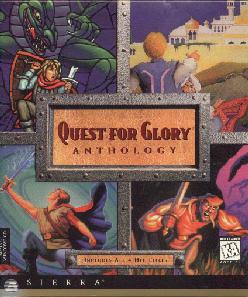
The name of this blog exists largely due to one reason: Quest for Glory IV. That game series created the earliest recollection I have of actually caring about who created the game, wanting to know the artist behind the work essentially. In this case it was a husband and wife duo, Lori Ann and Corey Cole. In the years since, Lori Ann Cole has offered interviews about the process and has been quite candid about her time at the gaming studio previously known as Sierra.

It was 1988 when Lori Ann Cole proposed a four-game series to Sierra, where her husband had been hired as a systems programmer. While Corey programmed the game, Lori set about scripting it as well as directing the game overall. The series was originally known as Hero’s Quest, but this would be changed because of trademark issues with a board game with the same name. Renamed Quest for Glory, it continued on, eventually moving from EGA to VGA graphics, seeing the implementation of voice acting, and finally moving into the realm of 3D with the fifth installment.

During this time she worked on a contract basis. As she explains on her company’s website concerning her lack of actually being fully employed by Sierra until the fifth installment:

Up until this point, I had been a freelance contractor with Sierra working for royalties. They kept trying to get me to sign an exclusive agreement with them, but I wasn’t about to unless they paid me the extra bonus like Roberta Williams had from Sierra. Then the government decided that exclusive contracts meant Sierra needed to pay Social Security and other benefits, and Sierra dropped the idea (Transolar Games Entertainment).

Here was a game that offered day and night, required the hero to sustain himself through proper rest and food, and rewarded players through an experience system not based on levels, but on what skills they used. If you wanted to become a better user of magic? Use magic. It also offered the option to import characters from one game to the next. For Sierra, it was quite a step away from the pure adventure titles for which it was known. However, Cole recalls playing Wizardry and was working on her own RPG system at the time, and this is what comprised her focus on games (Adventure Classic Gaming).

Playing the adventure gaming genre quite heavily as a child, Quest for Glory always struck me as different and more enjoyable, and it was not until years later that I was able to articulate why. Cole has also been kind enough to discuss this in interviews, offering how she saw her RPG/adventure blend to break from the mold, and why:

The Adventure game puzzle-solving aspects of Quest for Glory were intrinsic to the world, not patched-on, “here we need a puzzle” types that some games used. Too many Adventure games had puzzles based on the “Guess the Designer’s Mind” school of design. There was only one solution to a puzzle, and you needed to find it out no matter how illogical it seemed (ACG).

In an e-mail exchange I had with Ms. Cole months ago, she also revealed that she saw the playing of her games to be truly trying to reach an experiential form of storytelling merged with gaming. Coming from a tabletop RPG world, she did not feel games could quite reach the same feel those sessions could offer, but hoped to push forward beyond the need of being stuck at a hurdle when one could not solve a problem. If anything, the game shows the initial workings of what we now expect from an open-world or sandbox environment. So you can’t figure out how to get past the gate of skulls in front of Baba Yaga’s hut? Why not walk away, do something else, and come back to that particular puzzle later?

While the story itself was still linear and did not offer much actual choice in terms of altering the story (again, Cole is a storyteller and wanted to be sure to offer that skill to the players), it offered a player more choices in how to go about completing the tasks and building his or her own character. The three (later four) character classes all had different strengths and dependent on which one you selected, you would be able to access different parts of the story. If you were stuck, that did not mean that you could not continue playing. It is an element of game design we can take for granted with our Fallouts and Elder Scrolls, but one that certainly still continues to hold a charm to players.

Being noted as a female game designer, she has also been asked about women gamers a number of times. As she explains it, “For the most part, I designed the sort of game I wanted to play. I wasn’t trying to shoehorn my design to some artificial, stereotypical constraint” (Strange Horizons Articles). This was meant as a criticism of the idea that the gaming industry needs to market itself to a certain demographic (i.e. we need to make this more friendly for female gamers, or it needs more sexualization of female characters for the teen male market). Unfortunately, the original idea for Quest for Glory was to include more options for characters, and ones that were not based on class, but due to budget and artistic constraints, this was changed as the game progressed (TGE).

For a while, Cole ran a website called How to Be a Hero, which had forums where users interacted with each other in fantasy role play based on the same world. In recent years, she has frequently praised the idea of being able to interact with others online, and as she explained to me about this project: “Thus I decided that the website really was the game. It let people play what they wanted to play, how they wanted to play it.” As Corvus Elrod has stated, “Game is a set of rules and/or conditions established by a community and intended as a bounded space for play.” A game designer and storyteller at heart, Cole persists in her own field.

Currently, she is once again working on a design concept for Interactive Fiction called the School for Heroes, where the goal is to shape the game based on user interaction more akin to the tabletop sessions she has participated in for years.

Feel free to read more bloggers’ highlights of women in the technology industry.
Tagged , , | 4 Comments

Der Kampf

Tim Kretschmer.

Due to Tim’s playing Counter-strike, Far Cry 2, and other killerspiele, as German politicos enjoy calling them, Germany is wanting to become even more stringent on how it is handling videogames.

While growing up I recall speaking with my German relatives about the fact that blood was commonly edited out of their games. These days my brother is less than pleased with the fact that his games are heavily censored. Germany, still riddled with guilt over the Holocaust, seems to want to go in the exact opposite direction with regards to violence (which is quite curious considering they still allow xenophobia and racism in their culture, particularly against those from Turkey).

The call has now been put forth by Joachim Herrmann of the CSU (Christian Social Union) to ban such games. As he puts it: “Wir müssen uns jetzt endlich aufraffen und den Mut haben, die brutalsten Spiele zu verbieten. Das ist keine Frage der Medien- und Kunstfreiheit mehr” (Der Spiegel). Translation? We must finally pull ourselves together and have the courage to ban the most brutal games. This is no longer a question of freedom of the media or of art.

He’s not alone. We also have Hans-Dieter Schwind, President of the German Foundation for Crime, calling for the same (Heise Online). Mechthild Ross-Luttman, the Minister for Social affairs, attempting to make WoW an 18+ game (Welt Online). A complete ban on killerspiele, as proffered by Hans-Peter Uhl of the CSU (Der Spiegel). As the shirt to the left, found here, states, I don’t vote for game killers.

Both GamePolitics and L.B. Jeffries have already presented much information on this, as well as asking other poignant questions (should we ban Catcher in the Rye because Mark David Chapman read it obsessively before shooting John Lennon?). What intrigues me is Germany’s particular reaction, especially as the largest country in the EU, the country with the second most school shootings in the world, and the one with the harshest videogame restrictions in the EU.

Germany has a chip on its shoulder.

The problem is as I’ve alluded to earlier: Germany still is making amends for the atrocities of World War II, which, while understandable and commendable, is blinding it to present-day reality. It is beneficial to not bury the past and ignore it as if it did not happen, but it is detrimental to fixate upon it so that growth becomes stagnant.

Which is why this makes no sense. The German politicians are essentially asking Germany to bury its head in the sand when it comes to these games. I can see tighter restrictions on sales of the games (though I believe that’s the parents’ job, not the government’s), but I fail to see how the outright banning of this media seeks to do anything but ignore the issue by placing it out of reach. The last I checked, putting a toy on the top shelf does not deter nor disinterest all children anyway. Those who have become fixated will find a means.

Throughout history we have glorified violence. Through epic poetry, song, theater, and the writing of our history we look at battle, the glory of victory, and the honor that lies therein. Today it has saturated to our media in the form of film, music, and yes, videogames. To want to put a stop to that through censorship? It does not change the fact that it exists. Addressing the issue by steadfastly not addressing it creates more problems than it seeks to alleviate.

It seems to me what we should be questioning more is the culture that pervaded Tim’s household. His father had how many guns? They went to practice together starting at what age? He was considered a spoiled brat who acted haughty toward others in table tennis competitions? Videogames, in this instance, seem merely one more element in the troubled psyche of this youth. The elements were already present and we’re to believe his playing these games somehow told him to pick up a gun and shoot people?

This is not the case of some innocent, likable teen picking up a shooter and deciding to go on an Amoklauf. There was a predisposition, and claiming to know that any one element over the other seems one purely made out of political design.

Therefore, the fact that Germany has the second-highest rate of school shootings seems to have more akin with the fact that it’s also the most populous country in Europe. So if Germany really sees violent games as a problem, then I demand they pay closer attention to all of its media. Shall we now ban Shakespeare’s tragedies and histories? They’re quite bloody and can give the wrong impression of killing. Will we no longer teach anything but social history in school, forgoing military history? Can we no longer watch the majority of films that are released, which feature violent images?

To start the path of censorship in this direction has no end, and does nothing to alleviate the problem. Instead of treating the symptoms of a violence-obsessed culture, it might help to address the cause in the individuals. Yet, due to Germany’s harrowing past, I have a feeling that there will be attempts to make sure that no one can see their youth as possibly obsessed with such images. Which seems counter-intuitive, considering how restrictive the Third Reich was, where even thoughts of homosexual acts could land you in a concentration camp or see an outright execution.

Too bad they don’t realize that youth across the world are and have been taught to appreciate violence and what it can accomplish, and it’s only our ability to reasonably question and give voice in a free environment that even allows us a chance to speak against it. The solution is not closing our eyes and shutting our mouths.

Tagged | 3 Comments