Not so Private I’s

This month’s Round Table asks you to share your early experiences playing games, any games, with family. Good or bad, how did those early gameplay moments affect your approach to games now? Can you trace your current enjoyment of video games back to these memories? Or, perhaps, you didn’t play games with your family. Was it a lack that you noticed at the time? How do you feel it has it impacted your “use” of video games now?

It almost feels like cheating taking part in this month’s Round Table, considering the conversation I just posted with my mother, but I’d like to take that as a springboard into this one. I think it’s fairly obvious that my family was one that gamed together, and I have any of a plethora of memories concerning that, all the way from playing or watching adventure games, blasting Nine Inch Nails (parents bought me The Downward Spiral back in 1995) while playing 4-person Goldeneye, BBS boards, et cetera. I reiterate, we were a family that gamed together.

As my mother stated: on the one hand, she enjoyed it and wanted to share that love of gaming; on the other hand, she wanted to encourage my brother and my imaginations. There was never a shortage of recommended books, films, games (of all varieties–not just video), art, music, or encouragement to pursue these endeavors. When I told my mother my high school aspirations of being a lawyer had turned to being a Theater and English double major, she shrugged and told me it was my decision; meanwhile lamenting not being able to attend my performances. She wanted us to not only enjoy, but think beyond our world, think in a new space.
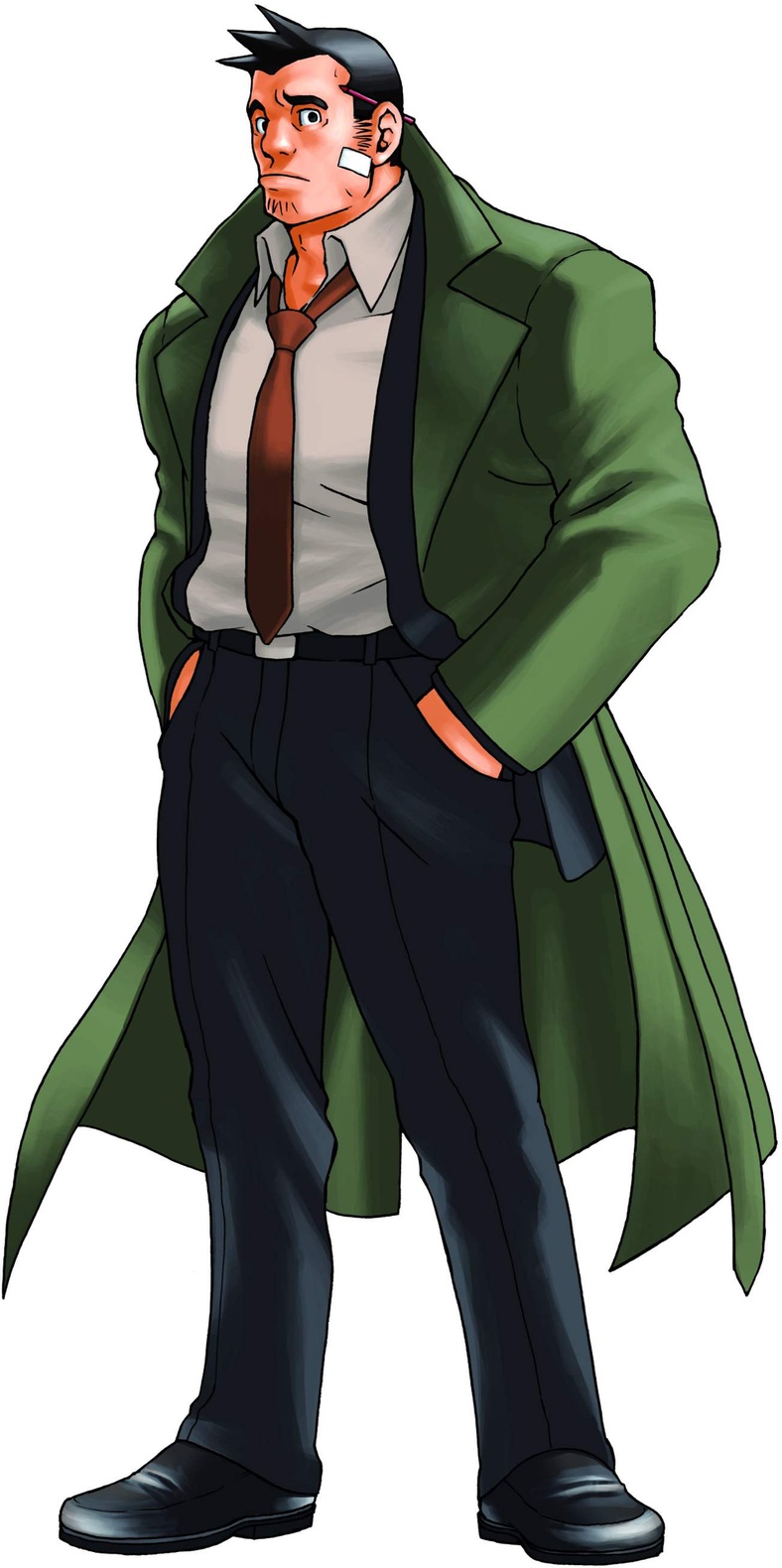
Which is what I’m finding myself doing while metagaming Phoenix Wright: Ace Attorney–that is, when I’m not finding Detective Dick Gumshoe (pictured right) absolutely adorable.

During high school, it was fairly typical for me not to return home until ten or so in the evening; one of the activities that kept me away from home was Mock Trial. Again, I had aspirations of the legal profession before I realized I’m far too radical in my beliefs for the current (or likely any) system. One year we even had a trial on hazing, which, in retrospect of my college’s practices, humors me greatly. However, I enjoyed combing witness statements and building a prosecution and defense on the exact same case. The logician in me found it pure masturbatory pleasure.

For me, this poring over statements and facts was not about winning, it was about the stories I could create from either side. In fact, I was approached after one trial and a Tennessean promptly told me I needed to drop my affected English accent, I wasn’t fooling anyone. Color me surprised that my largely subdued German accent was mistaken for English (quite common in the South). I could care less about the actual winning portion of this competition. I wanted to see how others constructed their logic points into a narrative that was convincing. What portions of the story stood out to them? These were all based on real trials from past decisions, by the by.

Yet, as anyone who has played this game can tell you, the way these cases are built do not necessarily follow the legal proceedings as we would expect. Sure, the underpinnings are there, but you also play your part as a detective that reminds me of the days I watched Gabriel Knight being played and grew fond of the word Schattenjäger. What I’m finding myself doing is flexing that muscle my mother made sure I practiced daily from as early on as I can recall: imagination.

Each case, each witness, and every new piece of evidence has me constructing new theories, scenarios, and (due to my theatrical ways) imagining these scenarios with the prescribed actors. This has meant that the game, thus far, has posed no challenge to me whatsoever–but I don’t mind. Games do not have to be challenging for me to enjoy them. They just have to give me that spark, that interest, and/or make me feel I am actually doing something with the narrative or elements that are presented.

Another point my mother made in our conversation was that my family played videogames because it had us talking. My family is pretty evenly split in interests and tastes in film, literature, art, et cetera between my mother and myself versus my father and brother. Games were one avenue where we could all play, with perhaps a few outliers of personal taste here and there, and would have fun conversing about them–especially when we’d all gather around a table or computer desk. I’d love to take my brother and mother Phoenix Wright and just sit in a room to talk it out with them, gather their impressions, and have a few laughs over memorable lines.

This is also probably why I’m enjoying progressing the arching narrative strung along in each case as well. My mother and her adventure-loving gaming habits taught me to care about narrative. I cannot recall being read to very often (it happened, but I was too young to recall, and I started reading as soon as I could): instead, I recall being told many stories. While I may regret not hearing the prime sources that are my grandparents and their stories of World War II and Germany directly following, she has relayed to me countless bits of information, often weaving grand tales that seem impossible to those not familiar with my family’s knack for relaying information (we’re all storytellers).

Meanwhile, as games progress, I don’t share my mother’s view of preferring books to games more often. Don’t get me wrong, I love books (I have no shelf space left, and I acquire books as if reading is going out of fashion), but I love so many art forms and forms of expression that I cannot deny the hold videogames, comics, theater, film, art exhibitions, et cetera have over me. Especially now, with where we are. More than ever, we, the gamer, are given the tools to put forth our imaginations, build our own characters, create our own character sketches and bios, color our worlds, and share our experiences with each other.

Even while Mario jumping on Goombas isn’t terribly imagination-stoking, it still took me to another world and allowed me the freedom to escape the conventions I saw around me every day. Phoenix Wright has me doing that with my basic assumptions of how a trial works, and yet, I can’t find any fault in that whatsoever. The game is so broadly painted that all of those logical flaws just fit into the logic system of a different world–one to which I find myself readily adapting–knowing that I can probably step into any world and learn one thing: to adapt. While it is debatable on whether or not my symbolic logic course has helped me with this game at all (hint: check yes for this debater), I know without a doubt that it is this imaginative streak to envision possible steps and sketch out scenarios that has me enjoying this game far more than I should at the exclusion of others in my queue.

And hey, as a child who was asked at age five to partake in a Dungeons and Dragons campaign (even a wizard back then), was encouraged when he decided to follow the path as one of those weird ‘thespians,’ and grew up watching Mad Max and reading post-apocalyptic fiction, I’m more than a little excited to continue my love of the Fallout series at the end of this month, which I know I’ll be discussing with my brother at great length.

Please visit the Round Table’s <a title=”Round Table Main Hall” href=”http://blog.pjsattic.com/corvus/round-table/”>Main Hall</a> for links to all entries.
Tagged | Leave a comment

Vorpal Bunny Ranch Corral: #1

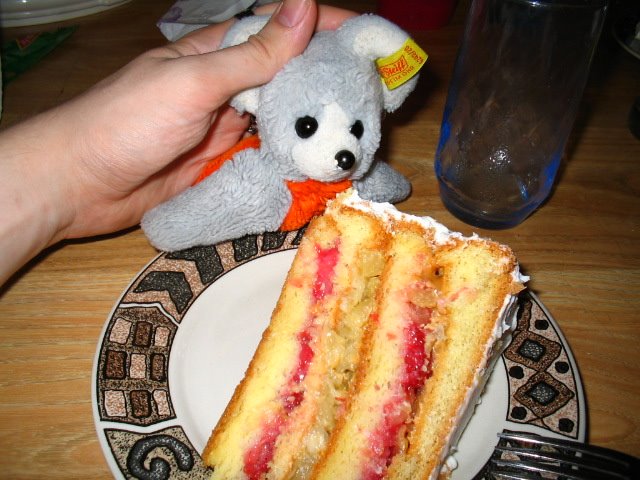
(He’s been with me since Day 1; his name is Toldi. The cake is vegan.)

If you prefer, you can download and listen.

There you go. I love conversing with people, and the one regret I have with my grandparents is not mining them for information about their lives; they were all survivors of World War II, and only one was not German. At least I can preserve this.

After spending time recording this and learning a few new programs (off and on for seven hours–there was time for dinner and a plethora of political conversation with friends), I am off to enjoy myself.

Tagged | 4 Comments

Intertextuality & Reader-Response

I’m a lover of puns; this is an ability I attribute to having learned multiple languages and having been raised bilingual. Given this admission, I don’t believe it that hard to leap to the conclusion that I am also a fan of intertextuality, in its myriad forms.

Before starting this blog it would not be uncommon for me to have a discussion with friends over videogames and their function as entertainment versus a narrative text versus an artistic choice versus a simple interactive interface versus… you get the idea. However, the other intertextuality that is striking me more and more is that of emotional connection, which is not quite the same as immersion. I’ve been attached, emotionally, to many characters and situations in games when the games themselves made no draw on actually making me feel part of their world. This is hardly a surprise, as the fine arts have been able to do this for years.

Despite Brecht’s insistence that all of us become drugged with emotion when watching a play, I would argue that an audience is quite varied and many will surprise you with their reaction. This is where we begin walking down the path of a theory of criticism that is the rather looked down upon: reader-response (at least in the literary circles through which I circulate). If a particular videogame’s dialog, voice acting, or plot make me yawn, I am likely not to play them these days. When I was younger I felt a need to complete a list, or to notch my belt with my gamer status, so to speak. These days I’m swimming in games and often leave a game ignored in favor of another game that catches my interest.

Yet, there’s no denying there are titles that grab my interest from childhood which I am almost afraid to replay due to my more honed sense of what I like and dislike, my own reader response, and the intertextuality I have now to offer. I’ve avoided the Xeno– games because I am actually quite familiar with the literary, mythological, and operatic devices it uses and am afraid of how I may view how well or poorly they’ve been constructed together in the script. There’s almost a charm to that game I fear may not be there upon picking up the games again.

Most of those fears are foundless, actually. I began (and was quickly distracted away from) Fallout this summer and found it just as amusing and nuanced as I recalled it.

What occured to me the other day was the fact that this blog and the ensuing dialog in which I am engaging with other bloggers (even if reading their posts and never commenting) is that I am bringing a further toolset with me to bare in analyzing videogames I play in the future.

The other avenue in which this field amazes me is how it is influencing the world around us. Not only are videogames providing entertainment, but they are feeding back into our perception of the world. This can as simple as the dream I had before a fellow gamer’s birthday party where I imagined us playing human Tetris (this became disturbing when the dream allowed for us chopping off the rows that were complete), or a fellow coworker admitting she played the same game and envisioned stacking up objects around her to entertain an otherwise distracted mind. However, we’re also seeing them starting to infiltrate popular culture, art, and I imagine they’ll add to how we envision future inventions (much like science fiction, especially shows like Star Trek).

Take Owen Pallett, for example. For some he’s known as a violinist who’s supported Arcade Fire both live and in the studio. Otherwise, he’s the pretty much one-man band behind Final Fantasy. The name itself is rather obvious; however, his albums deal with more weighty topics through the lens of videogame metaphors and allusions. His second album, He Poos Clouds, had a running theme where eight of the ten songs were dedicated to a particular school of magic from Dungeons & Dragons. The song for illusion is the album-titled track:


(I wonder if he’s played Shadow of the Colossus.)
So there is no confusion for those who may wonder concerning the lyrics, yes, he is queer. Overtly, the song calls upon the listener to realize the narrator’s sometimes confusion of the world he inhabits and that of the boys he moves with his thumbs. This further breaks down into the rather desolate feeling of a gay man stuck in a world where everyone seems stricken with a dark past, so he identifies more with fantasy versions of the sex for which he pines.

The last stanza is one over which one is constantly tripping over references to the Legend of Zelda and Narnia series:

Gotta fulfill the seven prophecies!
Gotta be a friend to grandmother!
Gotta rescue Michael from the White Witch!
Gotta find and kill my shadow self.
Gotta dig up every secret seashell.
You may have been made for love–
But I’m just made.

Videogames, they’ll get you to thinking, they will. Much as with the case of intertextuality and how it is interpreted outside of literary theory and in terms of popular culture, these are references which will add to our appreciation and understanding of the song itself. Could one get the song without the above lyrics? Well, the question would then become whether the allusions to Link are really necessary to the song, or whether one can have an image in one’s head of various quests and tropes one would expect from a videogame.

These are things I’m questioning more because writing in this space is encouraging me to pool together my thoughts and examine how the various elements in my life connect. After all, if it initially fails, I’ll just cart it in front of me, examine it again, take a deep breath, let it out, and try again.

Tagged , , | 1 Comment

Centipedes, beetles, and hornets. Oh my!


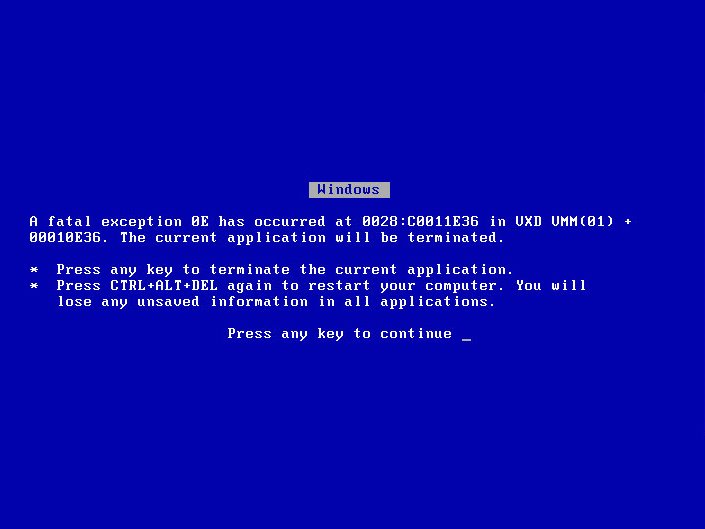
I loathed this screen. Really, I did. From the mid to late 90s it could cause a cursing storm that would jettison me from my chair and have me come crashing back down on my keyboard; hitting CTRL-ALT-DEL is now a natural response when my computer does not respond because I know Microsoft just made that screen invisible.

Spore has managed to finally put me off playing it (and I’m working up the stomach to get through the next leg of Deus Ex–by playing other games) because of a rather pernicious bug. Every time I go to my home planet and try to leave the atmosphere again, the game will crash. Pre-patch, this was fixed by selling off some turrets. Post-patch, one apparently has to sell off decorations that proliferate throughout your cities (which I never placed, I might add). I’d ignore my homeworld (and, indeed, it can never be conquered, but I can’t bring myself to metagame to that extent), but it gets attacked by religious zealots all the time. Sounds like my real life.

However, I began to wonder how other mediums get me to step away and just give up. Sure, I could overlook something or push my way through, but I have so many options that I rarely feel the need to stick to something. I mean, having started Don Quixote at the beginning of the summer and finished half of it, I don’t feel the need to press more than fifty pages in any given week.

In most other mediums, it becomes a choice. Sometimes one simply does not have that choice with games. I can warn you off the Diablo Sin War novels written by Richard A. Knaak (I love Blizzard, but that love does not extent to this hack of a writer), but I still was able to quickly zip through them and just as promptly move on to something that wasn’t plagued by double negatives and ellipses every second page (to build suspense or tension in lieu of actual writing style). I still recall being crammed into a small, Midwestern town’s movie theater to watch Lord of the Rings: The Return of the King, and noticing in one scene that Orlando Bloom forgot his blue contacts and Legolas was suddenly, inexplicably able to change his eye color between scenes.

Much like the voice acting I mentioned in an earlier post, this can detract me and suddenly force me back into the realization of what I’m actually doing, but it doesn’t halt the experience for me. Games may be the only medium where I have to become creative to actually force myself past an issue. I have become a veritable master of navigating Quest for Glory IV: Shadows of Darkness (even to this day), but that came through hours of scrounging through message boards; and later, when the option became available, of running DOSBox. As great as I found Vampire The Masquerade: Bloodlines, I had to quickly go to message boards to reach one of the final battles by entering a no-clip console command so as to get past a door which was not recognizing itself as such (look, have all the existential crises on your own time, not when I’m playing).

However, you know what’s great about this? Gamers are a community. We are inevitably strewn across multiple message boards, forums, and IM clients. When Spore kept crashing, I was able to just quickly Google the phrase ‘Spore homeworld crash’ and reach the relevant postings about the topic on any number of message boards. I recall doing the same for VTM: Bloodlines and multiple other titles. While I could wish that these bugs would magically disappear, I am, at the very least, thankful that I have such easy and quick access to learn how to bypass these issues. Now, whether or not I wish to go to the extremes sometimes required is another matter.

Yes, this shows that I am primarily a PC gamer at heart.

Tagged , | Leave a comment

O frabjous day!

I have many memories of videogames, overwhelmingly positive. While I realize the dangers of nostalgia, what I’d like to do every so oft is recall something from my gaming past and see why it held such wonder for me. Also, even though I have a personal journal, these are memories I rarely record, and this seems the appropriate space.

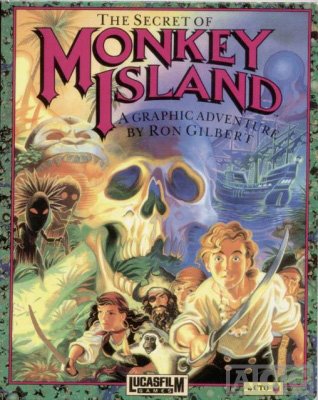
Beyond just playing games, I enjoyed watching family members themselves play. Long before I ever picked up The Secret of Monkey Island for myself, I recall quite vividly my first interaction with it. My family used to own an optometrist shop in my hometown of Fulda, and upon one visit to see my grandparents, my cousin Christian was also visiting.

He went on my grandfather Alfred’s computer and showed me this game. He was on Monkey Island itself and I remember him using the rather large Q-tip to gain entrance to LeChuck’s cave. Later that evening he and I would return to my grandparents’ house and we would set up a camp in the backyard, not too far from the house, and run a Nintendo out to the back and played videogames quite late into the evening. I’m not sure what playing the Nintendo outside in a tent actually accomplished, and I don’t even recall sleeping in the tent…

I spent a lot of my time watching my mother play numerous adventure games and my father play his SSI Dungeons & Dragons Gold Box series. This is why a short while ago I wondered about not only the player’s interaction with games, but the non-gamer’s reaction as well. I enjoyed sitting down and watching my mother play these games, seeing if I could read the text before her uncannily quick eyes absorbed the information and clicked on to the next text box. For the adventure games, it created a sense that these were just like a book I might pick up, or a film I might watch, but that there was someone actually controlling the actions–someone I could physically see in front of me.

I never did watch my parents play any game from beginning to end, which would be useful when I would later pick up those same games and try them myself. The puzzles weren’t ruined, and in many ways, it was a whole new experience. I knew these characters and had already established a connection. Roger Wilco, Larry Laffer, (insert name) Hero, King Graham, Guybrush Threepwood, and many more were household names. Later, discussions would occur between my mother and myself in which we’d chuckle over the Space Monkeys in Space Quest V: The Next Mutation, the adorability of the Meeps in Quest for Glory I: So You Want to Be a Hero?, or even recall lines from the Insult Sword Fighting of Monkey Island.

Shortly after I started this blog, my mother and I had a discussion, and I think this excerpt from that conversation sums this post up rather well:

Daniela: You know, I never even considered that gaming would have an impact on you guys.
Denis: You do realize you are in a minority as a mother who pushed games on us? :P
Daniela: It just seemed a fun family thing.

For my family, this was just another one of those shared experiences, and one which I’m glad to say I have. We didn’t merely play the same games and then discuss them, there was an added element of actually sharing time together. I even recall all of us playing through the beginning of Noctropolis and providing different solutions.

Tagged , , , , | Leave a comment

Which doctor?

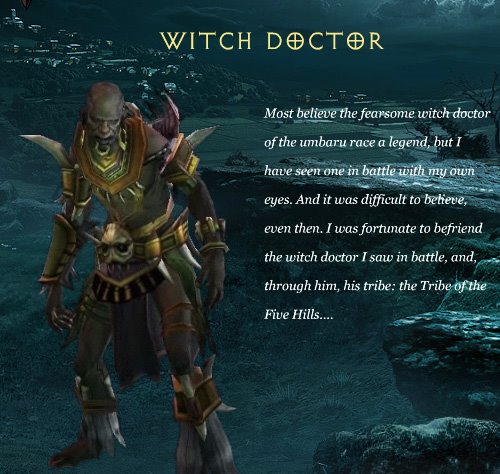
The culture of the umbaru of the lower Teganze is fascinating and perplexing to those hailing from more civilized walks of life.

I’ll admit I’m somewhat hesitant to make this post. While I’ve been reading Pat Miller’s Token Minorities blog for some time and was around to witness the backlash to N’Gai Croal’s concern about the first Resident Evil 5 trailer (I agreed with him), race is a topic about which I’m not nearly as well read as gender and sex. That’s not to say I have not read anything, but it’s a topic about which I feel apprehensive precisely because it’s a discussion we rarely seem to actually have. I was able to talk feminism with my mother all day long and it was part of my degree, so gender issues are a comfortable stomping ground.

But let’s discuss it. I also wish to make it perfectly clear that I’m not calling anyone racist–that’s not my intent. Much like with most things I post here, I’m noticing a trend that infiltrates from our own society into the games we play. In other words, I want to add to the discussion over the issue of race and how it is presented in videogames. Racism, like sexism, exists. Unless we discuss it, we can’t really deal with it.

When I saw the first video for Diablo III I was thrilled, sure. I was also somewhat baffled. As Blizzard’s page for the game went live, I devoured the information and was somewhat taken aback when I read the description I put up at the top here. ‘More civilized?’ I suppose I could harken back to the days of Diablo II and remember the Paladin fondly as a civilized, devout man, but this is not that game. Thus far, this is the only instance of a black character I’ve seen, and he’s already being depicted as less civilized.

I realize many talks around the character classes have occurred and it has been stated many times that the design team wanted to create character classes that were instantly recognizable–archetypes. However, one other aspect that is instantly recognizable is a stereotype. In a class on Gender and Media at my alma pater, we discussed depictions of black males in society, and one that frequently came up is as an othered shaman of some degree or another–especially in games. For that we need go no further than Michael LeRoi in Shadow Man (or, alternatively, the Jamaican-speeched trolls in the Warcraft series).

What’s even further confusing upon continuing to read the information we have on the Witch Doctor class is that they do seem to be setting up to be othered with mentions of human sacrifice. Is this troublesome? I realize Blizzard is trying to flesh out a world with all manner of different belief systems, cultures, and a diverse cast of characters. I commend that. However, I become somewhat uneasy when this starts to resemble our own world in many fashions. Why do we replicate our own world with its histories and racial underpinnings when seeking to create diversity in fantasy games? As N’Gai Croal stated in his comments on RE5, there’s a history here.

Included in that history is the way the Witch Doctor carries him or herself. As a male, in the gameplay videos we see him hunched over. The female is carrying herself, very noticeably, upright. The history of dynamics between race, sex, and how we project images unto other people could take up a whole other post, and likely will at some point.

Am I blowing this out of proportion? Possibly. However, much as I pointed out with sexism, racism permeates through all sorts of nooks, crannies, and Grand Canyon sized crevices in our society. How else does one explain people feeling the need to articulate on how articulate and well-spoken Senator Barack Obama is? The note of surprise from some people that a black man can be articulate speaks much to how we see ourselves versus the othered race. So again, a history exists.

What do I make of this? Right now a sense of slight unease, but with the recognition that I have only seen the tiniest portion of this game. I love the idea of a Wall of Zombies, for instance, but I hope that once I see more of this game and world that I can be somewhat relieved. Seeing as we don’t seem to see many black persons in the world of Sanctuary outside of the classes we the players can choose, the representations of them just happen to fall into that realm of more scrutiny by someone who has been, admittedly, trained in ways to recognize this imagery. It might also be intriguing to note that this is written as if from a scholar’s journal, so we may be playing with racial dynamics within the game.

Will this game actually explore racist and classist notions? Will we see some post-colonial discourse occurring? That truly would give the world some flavor and history if done correctly. The Warcraft series already plays with racial identities and tensions somewhat, even if it simplifies it to two opposing factions…

Am I just being too quick to jump the gun on this one? Let me know your thoughts.

Posted in Uncategorized | Tagged | 12 Comments

Practice, Practice, Practice

Whenever someone finds out I’m a videogame enthusiast, I can expect one awkward question. Much like the ever-annoying What kind of music do you like? I rank What type of videogames do you play? up there as equally baffling. I know some people tend to fit themselves into a niche, but if there’s a good game to be experienced (for any number of reasons), I’m generally on board to try it. Same with music, by the way, so you’ll never hear the stock response of Everything but country and rap come from my mouth (or fingers as they may be).

Though there is one type of game that I never play unless someone else actually brings it to my attention: sports games. Right now I’m casually looking through postings of videogame jobs and on looking through Midway’s selection of titles, I noticed that they distinguish between sports titles and other videogames (which are just titled entertainment). Where’s the difference? From what I’ve seen, most sports titles could be likened to RPGs if one really wished to push the issue. The difference for me comes in the coating. I prefer my dragons, elves, aliens, and robots to linebackers and the not as sexy as their real life counterpart Fußball players.

I’ve had some small amount of experience in off-beat sports titles, such as Mega Man Soccer (even if I was never a large fan of the series) and the Mario sports titles. Otherwise, my knowledge of the field is relegated to whatever glimpses I gleaned from my father’s Fußball titles (they were actually in German much of the time, so the word stays).

Yet, it’s curious, because if I think about it, these sports titles don’t really remind me of a lot of the work that goes into playing an actual sport. The main thing I see missing is the grind, though I may be woefully misinformed and they’ve since added that little tidbit into these titles. Which makes me wonder if MMOs are more akin to how we view sports these days. Personally, I find the grind behind most rather boring, as I would the practice behind playing most sports–even if I understand there’s an eventual gain. Because there’s no eventual end-reward, I come to the metagame realization that I’ll be doing this again ad nauseam and paying to do so. If I’m going to force myself through something for an end goal, I’d rather it be rehearsals for a play or some Joyce. Again, it’s the coating (and I’m much not so much for intense physicality).

Now, you see, I like MMOs in theory, though rarely in execution. I prefer social interaction with persons I know, and since I’m fairly decent at such interactions in person, I’ll just as likely go out and do such. If those friends happen to play games online, I’ll gladly play with them, but I rarely find enough that play an MMO where I would participate and be able to dedicate myself to it. While I know the advice most people would give would be to join a guild, I can’t say that the idea really appeals to me. I’m very much a creature of whims when it comes to the games I play, so dedication is something I lack in terms of playing a game enough to be ready for raids and other such events.

However, it makes me wonder, do most people who play sports (not the videogames) actually have fun at it? When I hear many sports players talk about it, I hear words such as dedication, the feel of victory, teamwork, but I rarely hear the word fun. Is this where we are going with MMOs such as WoW? They seem to have the same community feel that many sports do, as I see it. While I’m sure people are having fun, it seems to have become almost something secondary in pursuit of another goal.

Just a random thought I had, and I’m not sure if it has full merit.

Tagged , , | Leave a comment

Emotionally Invested

This past weekend I went to a party celebrating my good friend Sir Iris’s (everyone loves a palindrome) twenty-fifth birthday. The central theme around the party was Sock Wrestling. Iris rents out a room in her house to various foreigners and students who happen to need a small living space, and her current flatmate is a young woman from China. When she (whose name I do not know how to spell off the top of my head) realized that women would be in the same competition as men, she blanched and said this was unfair.

Now, to be fair, Sock Wrestling is about getting off the socks of your opponent before she does the same to you. Brute strength is not something that really aids one in any appreciable manner. It takes a good mixture of strength and flexibility as well as strategic positioning. Iris and the other females participating did very well in winning against their male opponents. Then again, this is a group of bike fanatics, messengers, and women and men who equally pound back beers and whiskey in the same fashion. Many of us also participate in Pankake Sundays, where you’ll just as often see men cooking and cleaning.

We’re pretty equal opportunity–you do what suits your talents and desires. Other sports in which you’ll see equal sex representation are Bike Polo and Urban Golf. Because there is no preconceived notion of how these games must be played, there is no preconceived notion that they must be distinguished based on sexual differences.

When it comes to physical demands, we still tend to see females as the weaker sex. We could go in circles debating this with various data, scientific findings, and debates on evolutionary imperative. However, I would posit that the real problem comes from our desire to protect our mothers, sisters, wives, lovers, et cetera. I consider myself fortunate to be raised by a mother who believed in equal treatment of both sexes and stood up for me when I protected my brother from an older girl who started beating up on him by pinning her to the ground.

If we look at games that feature female protagonists whom we do not create, we find a couple of distinctions. First, we have the tough female stuck in a game of survival horror. This includes your Fatal Frames, Resident Evils, and Silent Hills. They’re an interesting genre, but one to which I’ll have to return after becoming more familiar with them (I’ve only seen some of these played and ventured on doing so myself of late). My initial impression is that even here we see clear distinctions between female and male. We then have the female who engages in ‘thinking’ and outmaneuvering more than she spends engaged in combat.

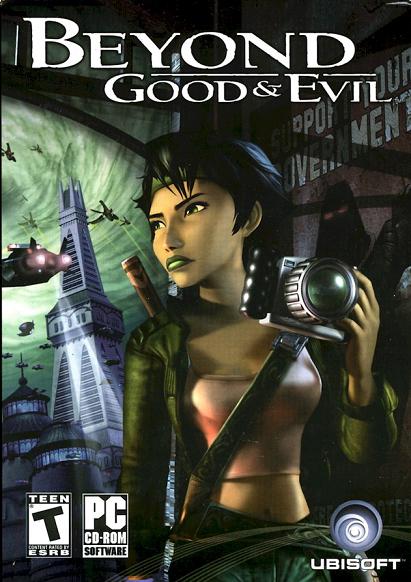
One game that appears to be many peoples’ darling is Beyond Good & Evil, largely because Jade is such an accessible character. Yet, as I think we see from the picture to the left, she is known more as a journalist than as some staff-wielding martial artist. I’m halfway through the game right now and still feel a sense that this game is not necessarily about the fighting so much as it is sleuthing about and solving puzzling situations. Sure, there is fighting, but it almost seems an afterthought, we had to include this.

Not surprisingly, Jade is rather lithe and agile in comparison to her male companions, Pey’j and Double H. It is also later revealed that she is capable of amazing feats of healing, because that’s new. Females that heal and are some sort of mothering force…

Don’t get me wrong, I love Jade and Beyond Good & Evil. It is a game whose plot and gameplay were in many ways refreshing from the normal puzzlers and action fighting games. However, I also feel that if the game had featured a male protagonist, we (as a culture) would not have believed the tears, emotional depth, and lack of fighting. The game also appears to have critically been well received while not selling well, though everyone I know who actually played the game will praise it very highly. It’s a game that stays with you.

The upcoming Mirror’s Edge seems to have some questions concerning its play. At first, it seemed that perhaps one would be playing a parkour simulator in which one avoided opposition and made use of stealth and acrobatics. The more that is revealed about the game, however, the more combat seems to infiltrate it:

Now, the primary focus still seems to be parkour-centered running and escape from a supposedly utopian/dystopian government. However, once again I look at the sex of the protagonist and wonder why we have a female (good rebuttal would be, why not?). This one becomes slightly confusing as parkour is a very intense physical exercise and sport, it is not for the weak of body or spirit. However, the game seems largely focused on non-combat as a solution. Sure, you can pick up a gun, but you can’t reload it and it will serve to hinder you in some regards as to whether or not you can grab on to ledges and the like (this is from what I’ve read, as the game is yet to be released).

The game does move into two directions I like. Less violent games that offer other solutions and acknowledgment that we can have protagonists that are not just white and male. I, for one, am a white male who does not mind a story told from another perspective. Playing a female character? Not going to cause any gender confusion here (though I’m a weird example of that, considering my view of myself as non-cisgendered). I believe this is a concern that has been relatively (we’re still not completely there) negated when some fears concerning King’s Quest IV: The Perils of Rosella use of a female protagonist did not see a reduction in sale numbers.

We also have figures like Samus Aran and Lara Croft who prove that males are quite capable and willing to play as a female protagonist. But even in the case of the latter of the two, we see some discernible horror in killing a human being, which is turned into an event depicted through the course of the series. We are not comfortable with the idea of blood thirsty women who walk into a room guns blazing–if she’s going to do such, she better have a damn good reason, like protecting her child (I just visibly cringed). Lara Croft may be exceptional in her skill with guns, but the thought of killing a human being troubles her, she’s still safely a woman. With the former we also tend to see her fight alien species and monsters, often dealing with the puzzle and platform situations of her situations as well as shooting.

Women are often used in support roles in military conflict. Whenever combat is suggested, we seem to come to a debate, however. Again, the argument of mental and physical differences will come to the fore, as well as the instinct that it is them for whom we’re fighting. Coming from Germany, it is very apparent that there is a generation that exists where males were largely absent due to World War II (though don’t believe for a second that this evened out the playing field). When I play a game, I expect to be taking some amount of fiction with me, however.

We very rarely play non-fiction games (those that have narratives).

Now, the question is whether any of this is surprising? Sadly, no. Games, like many mediums, largely reflect the culture in which we live. So, while there are sexist differences in our depictions of males and females in the medium about which I am writing, that does not suggest that the developers of these games are making them with these sexist notions clearly in mind. Sexism permeates everywhere, and unfortunately is largely focused on females, so this is not out of the ordinary. If we want to change sexism in games, we’d be aided by diminishing it in real life (though that doesn’t mean we can’t point it out as need be in a constructive manner). I do know that my mother rejoiced when the announcement was made that we would be able to choose the sex of our classes in Diablo 3, however.

One thing I have not yet touched on is the depiction of females as bodies in games yet. Don’t worry, I’ll get there in future posts as is needed. With the mention of Diablo 3, I do feel the need to address another nagging issue concerning things we (generally speaking) tend to overlook: the question of race.

Tagged , , | 2 Comments

Marines, the new Cowboy

For some reason, I enjoy giving the reasons behind my thought process. This weekend, Maggie Smith posted a news item on Kotaku concerning two female gaming blogs’ coverage and explication of the game Cunt.

I played the game shortly and was still processing it when I checked the comments section. The first comment (which has since been disemvoweled–the vowels have been removed so that you have to try to actually read the comment) was as follows: “I just can’t pretend to take any of that seriously… sexism against women just isn’t a real problem anymore.”

After sardonically responding that I hoped the commenter was sarcastic, another person backed him up and quickly told me to “Shut the fuck up,” while proceeding to assume I was a she (only females care about sexism toward females) and telling me that sexism is only visible when one seeks it (after all, if I just worked harder, I’d earn the same wages). Here I go seeking it again–consider the following posts (I’m not sure how long this will take–at the very least two) my response to him, as I refuse to get into it over at Kotaku. Instead, I’d like to try and produce an instructive argument that won’t be dismissed as soon as I post it.

A large number of shooters place you in the avatar of a military inspired male. This can be a space marine, soldier in a previous war, counter-terrorist, et cetera. To be considered unique, the first person shooter deviates from this formula. Yet, the fact that these shooters are seemingly so popular perhaps speaks volumes on the microcosm of gamers.

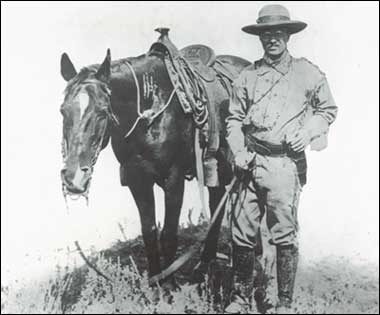
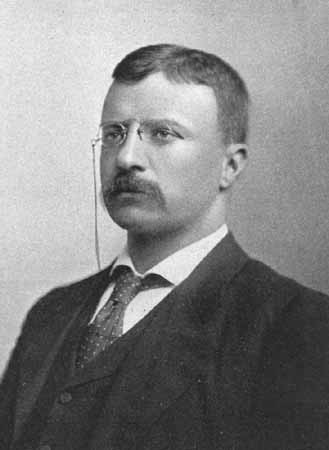
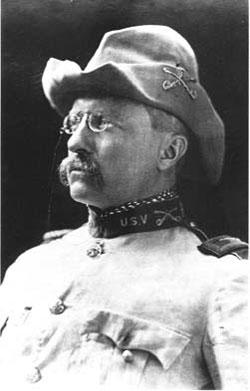
Teddy Roosevelt was a genius of marketing and branding. When he was running for president of the United States, it there was some danger for him to be trapped into an image of an effete New York scholar. To combat this image, he carefully manipulated the cultural rhetoric of the time and, as a male, fought against the trappings of civilization. Looking at the artwork of the time, there was a romanticism of the escape from the city and the trappings of feminine civility. Men needed to be beasts and roam the wild.

If it were not for Teddy Roosevelt, the cowboy image we saw in Brokeback Mountain would not have been so romantic. In seeking to ‘rough’ up his image, he appropriated the image of the ranchers and brought into popularity the image of the cowboy as we know it today:


Here was a man who was not chained to the city and the trappings of an academic and city-faring life–oh no. Instead, here was a man who knew quite well that his attachment to places like New York and being intelligent meant that in order to be a tough man, he had to explore the wild and be sure to look the part while doing so while calling on his military background.

Looks quite different, doesn’t he? Even something as frivolous as clothing can make a huge difference in how we see someone. Why not the avatar to which they liken themselves?

Escaping civilization is growing harder and harder to do. It is possible, but in today’s world of wifi, digital moneys, cellphones, and other accoutrements, we males have to find new ways of proving our masculinity. We also happen to live in a state of constant military action and a call to arms versus an enemy. In the realm of videogames, what better place to release these frustrations than shooters? What better breeding ground than places like Xbox Live, on WoW‘s PVP servers, and other such social spheres, where one can be primal, uncivilized, and be a non-fettered-by-woman man? It is in these places where they can decry how different their games are than The Sims, Ubisoft’s ‘z’ titles, the Barbie franchise, and other other of a number of normally pink and feminine games.

Sure, we also have sports (which have their own problems with aggressive players), but males in society are put in a double bind, especially in the United States. The commenter telling me to shut up is probably among those males that believes women are asking for free-handouts and are benefiting more than he in terms of affirmative action. Instead, males are the ones who are supposed to be ‘naturally’ more aggressive, physical, and working harder to earn their money. This is why there are more male CEOs. They’re more self-assured, confident, and physical–not emotional and prone to bearing (and then, of course, taking care of) children. But stop when told no, and acquiesce to a female’s demands when she makes them.

If one happens not to be the sports faring type, one is still looked at through the eyes of a male who could become a beast at any time. Any male can turn into an animal at the drop of a hat. Naturally, all males need to be able to break free and explore their inner, true man (or so we’re told).

When one cannot fulfill these desires, a proxy may be used in its stead. After all, killing in a videogame and yelling at someone over headset is hardly the same as if one were doing it in person. Becoming a space marine, then, becomes the same avenue of escape that Teddy Roosevelt encouraged men find through being a cowboy–without the threat of actually being shot. We still allow boys to become men, if the intiation rituals seem to be somewhat altered. Videogames just provide one more avenue for this assertion.

We’re living in a society where it may seem the two sexes are becoming more and more equal, but where distinct masculine and feminine traits are being sold so as to keep two separate markets to which one can sell the exact same product. The difference comes in branding and the key words one uses to sell these products. Remember, though, the key to advertising these products is that men act and women appear. Men’s products will tell them they’ll be given more confidence, and the verbs with which they use them will be active (e.g. exfoliants and astringents will scrub). Contrast this with female products which will discuss the end product, making women something pretty (anti-aging, brighter, healthier, et cetera become popular buzz words).

After all, when we put a female in the space you occupy in a videogame, she has to be in a horror game, where she can shriek, be startled, and it’s okay. She’s female, and by the end of the game we can masculinize her somewhat while making sure she’s a sexy image. What do we about those shooters that do not follow this trend, then? Games like Beyond Good & Evil and Mirror’s Edge? That will be the focus of tomorrow’s post.

Tagged , , | 3 Comments

The beefcake is not a lie

Welcome to the second edition of Fanny Fridays (shamelessly inspired by Grant Morrison’s Lord Fanny character from The Invisibles). These weekly posts examine the mirror of gender and sex that occurs between our culture and videogames.

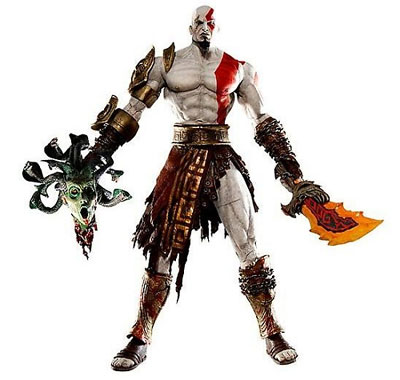
The latest episode of the Brainy Gamer podcast has an interesting moment when the Gamer’s Confab is discussing the perceived homosexual appeal of the game Singstar (don’t ask me, not my cup of tea). Matthew Gallant then chimes in that it is odd, as games such as Gears of War and characters like Kratos from the God of War series are much more homoerotic.

He’s right. But, let us remember that homoeroticism does not equal homosexual, it merely states that someone of the same sex could be attracted to the scene. As ads are well aware, one can play with these conventions, especially when the perceived heterosexuality of the models is not threatened.


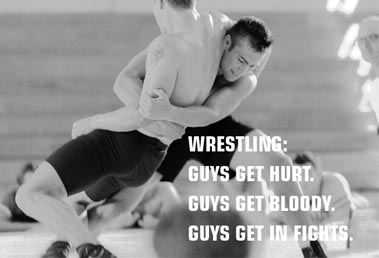
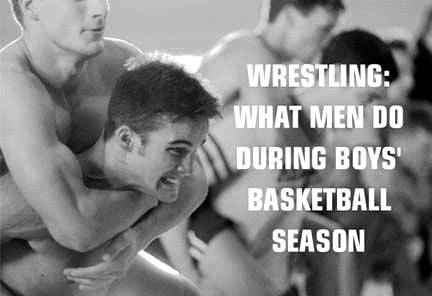
Beyond questioning the typeface of this ad (the word fights gets hard to read), it’s pretty clear what the ad is trying to get across. Wrestling is a man’s sport, full of blood and fighting. Pain is a masculine thing. At the same time, the model whose back is toward us has half of his singlet off, which creates an interesting juxtaposition of contact between the two men (though not if we consider the Ancient Greek style of wrestling).


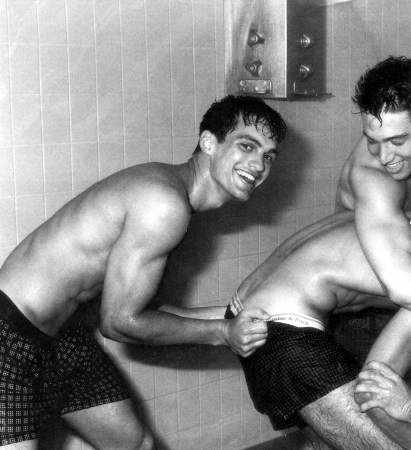
This is from the same ad campaign around the year 2000. Wrestling itself is a fairly homoerotic sport (again, I’m not saying anything about the wrestlers themselves, other than they attract men who would be attracted to the same sex). This ad clearly states that these are not boys, however. These are men. The subtext is saying they don’t need to play with balls, and they’re not pansies. They play it rough. Despite Abercrombie & Fitch’s supposed claims, these ads are quite homoerotic (and racist, mysoginistic, and a whole other can of worms), which is why I purposely chose them–the company claims these aren’t sexually arousing in any way:


Same company. I’m told this sort of playfulness happens in a lockerroom. Having only ever frequented the green room myself, I can say that I’ve never really experienced such boys will be boys behavior. Are we still claiming this is not titillating? The gaze of the guy on the far right doesn’t look as if he’ll be disgusted by what will happen in the next few seconds.


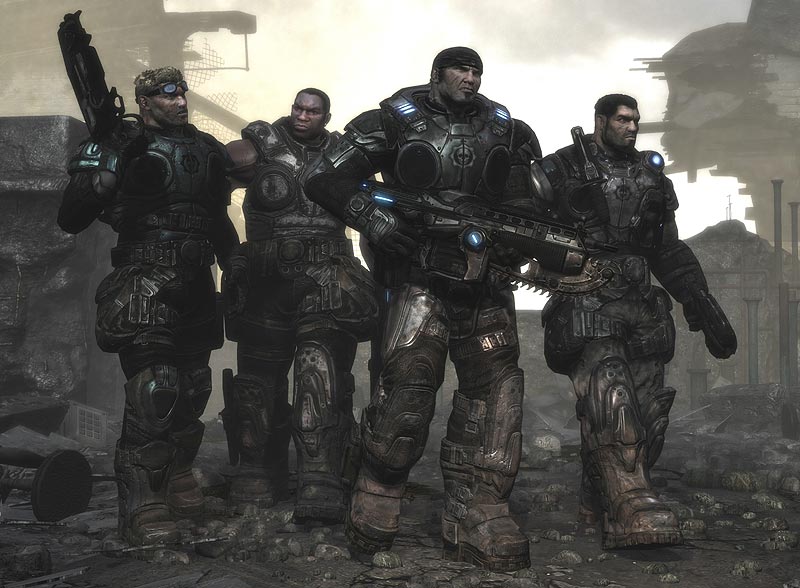
Now, this image? Not so exciting just to look at it. However, they’re all men, and while they may be armored by technology, they do still share an armored state with the men in the pictures above. You may be sputtering right now, so let me explain (and feel free to disagree). We’ve become a pretty muscle obsessed culture, though this is hardly new. What we admire is a ‘hard’ body which will often be described with words such as chiseled, sculpted, taut, et cetera. Rock hard abs, a six pack, labeling arms as guns, et cetera. Those Abercrombie & Fitch ads do not have a soft body (though, because it was the year 2000, they haven’t reached the ridiculousness of today’s ad campaigns). They are bodies in tension, armored (with muscles) and fighting each other.

What makes Gears of War homoerotic then? Let me postpone that question just a little further while I bring other videogame examples to the fore:

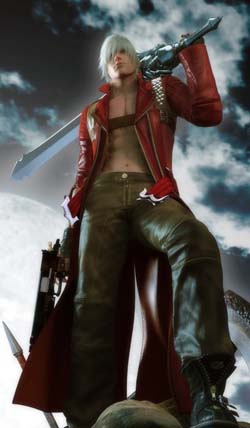
Here we have Dante from the series Devil May Cry. His rather muscled body, shaggy haircut, and style lend him to the metrosexuals I spoke of last Friday. Yet he is often juxtaposed with the image of a schoolgirl or vixenish female on whom he can practice various sexual innuendos, placing his sexuality beyond reproach. This means that his low slung pants are perfectly fine to be oggled by women and gay men alike–though it’s the latter, again, that would have me label this as homoerotic. There’s a thread over at GayGamer.net that actually asks for peoples’ thoughts on sexy game characters. Dante, not surprisingly, shows up quite often.

Dante is somewhat spared the exact same scrutiny and fantasy that can arise from Gears of War or any number of all (or predominantly) male environments. Any time you have close fraternization with males who are presented in a sexually desirable manner, there arises the question of whose eye is being attracted. Sure, as fighters, marines, and such in many of these games, these males are constantly making sure their physique is in the best of shape and they are prepared for the worst of dangers.

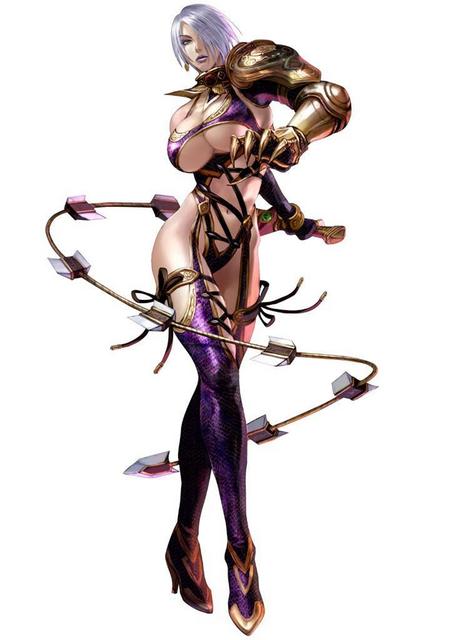
But, as I’ve pointed out in the past, this has to be countered with a pissing contest of sexuality. These men have to prove themselves straight, but that does not detach the desire with which we, the audience, players, and slash writers (not myself personally), are presented. While females are still traditionally much less clothed, and more often, in these fighting and fantasy settings (to points of ludicrousness–I’m looking at you, Ivy), males are also becoming much less clothed and are being presented as eye candy more frequently. We’re living in a culture that makes a commodity out of everyone’s body, though in different languages.

Ask a gay man how he feels about the male presentations? Tastes vary, but for the gaymers out there, believe me when I say there is a market that is looking at these game presentations of humans (and sometimes not so humans, as in the case of WoW‘s Draenai–it’s amazing what one can find out in reading message boards) and finding slash and/or masturbatory material. While there may be adolescents or adult males who oggled the chain that hung between Andariel’s breasts or waited for the cloth of the poor excuse for Ivy’s bra to snap, there is also a guy out there that is wondering just what exactly Dante is hiding a trouser’s zip away, or what would show up if that toilet paper didn’t roll across the save screen as Travis Touchdown sat down on the toilet to save the game. There are men carefully eying the tight t-shirts of the likes of Chris Redfield and Leon Kennedy. There are even those seeking out moments such as in Dead Rising, where one can see the protagonist in nothing but his skivvies. We all have different ways of getting our jollies–and for pure eye candy’s sake, there’s plenty of gaming fodder for the gay male (or straight female).

After all, if we really examine Kratos, is he that different from Ivy? He’s sporting the look of the one pauldron, has blades that extend a phenomenal distance, and is fairly lightly clad. The answer is, of course he’s different (and I’m not just talking the heels here). The same image presented on a female can present a dominatrix, whereas Kratos can be seen as a warrior per usual. Presenting a female and male body that appeal to the masses will see markedly different results. With that, I believe I have fodder for a future Fanny Friday.

Tagged | 3 Comments