Suspension of Disbelief?

Being my mother’s only son in the U.S., I receive lots of weird things in the mail. This picture, whose allusions to a rather famous chapel ceiling will be more apparent as you read the rest of this post, for instance:


The mannequin hand was a random occurrence in my mail one day (the cloud from a cartoony/Commedia production of Comedy of Errors at my alma pater). Recently the mail also has included Seed magazine. Not surprisingly, a lot of the focus of the magazine for its September/October edition is on Spore. At least three sections speak on it: how faithful is it to science and how it promotes intelligent design, looking at games that are attempting to utilize science through game mechanics, and a discussion between Jill Tarter and Will Wright. Part of that discussion is available as a video on Seed’s own site, here.

Seedmagazine.com The Seed Salon

Reading through the discussion in my hands, however, and around 2.10 in the video, Wright discusses how players transcend the boundaries of a realistic model found in games. He states, “They start arguing with the assumptions of that model, saying, ‘Hey, I don’t think that’s the way cities really work. I don’t think mass transit’s really that effective.'” It isn’t. Oh boy, is it not. At least in Chicago.

Anyway, Tarter goes on to press him as to how that builds on to the structure of a game. By allowing a discussion to occur on how it differs from real life. The implications would then become that after engaging in intelligent discussion, a desire to see and apply changes to the game model persists. To either isolate incidents and go through the scientific method in exploration of how things run, or to break the system. This would then lend itself to wanting to do the same in real life. Later in the discussion Wright also points out that games can teach in a vastly different manner because they are not couched in academic and pedagogical discourse, which can be very off putting to many children.

Is suspension of disbelief, the theory that we purposefully overlook certain inconsistencies to maintain an illusion, something that we necessarily seek in games, then?

Wright doesn’t provide narratives, however. He provides tools for us to create our own narratives. His suspension of disbelief, the fact that Spore is about evolution when it can clearly be argued that the player is actually the intelligent designer, seeks to beg us to ignore our own world in lieu of understanding similar concepts to ones we have in another house, neighborhood, or even galaxy. His games are a frame through which we explore our own understandings of social and scientific reactions.

The conversation later develops into discussing whether or not games are developing an acceptance of transhumanism in today’s gamers. Because through games such as the Sims franchise and Spore, we are able to push humans and species beyond normal limits, are we becoming more attuned to the idea that we as humans will force our next step of evolution on ourselves? Will we even be able to recognize our future selves from where we stand now?

An interesting read and/or watch, to be sure. Meanwhile, I believe I’ll go read some more on biodiversity and the tracking of human evolution despite civilization until I can go finish downloading the last bits of Spore myself tomorrow.
Tagged , , , , | Leave a comment

God of What?

Hey! Let’s play a game together and discuss it as a group of friends. What do you say?

A couple of blogger pals – David Carlton of malvasia bianca and Dan Bruno of Cruise Elroy – and I are joining together to form an online club devoted to vintage games. We want to invite people to join us as we collectively make our way through a game, sharing our thoughts and observations with each other as we go.

-Michael Abbott of The Brainy Gamer

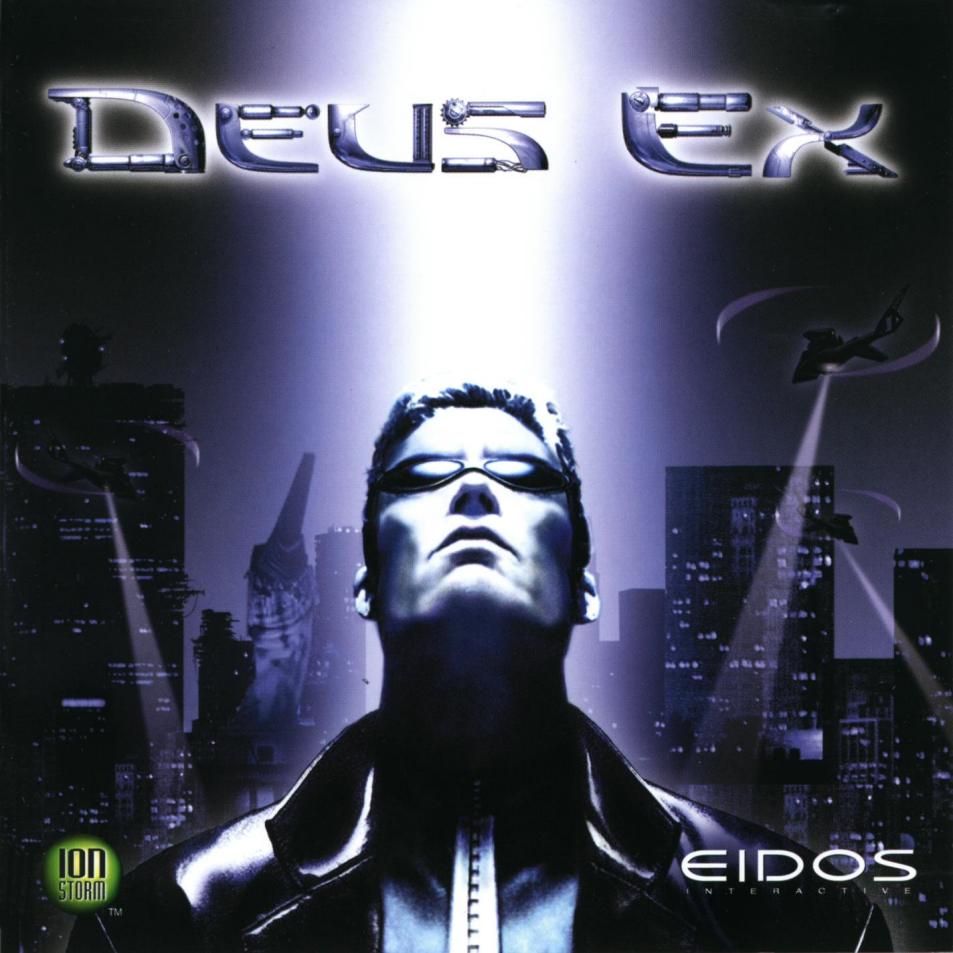
Unfortunately, I never got around to participating in the Vintage Game Club’s first venture, Grim Fandango. However, I resolved that I would join this time. Thankfully, it was a game about which I had no prior knowledge beyond seeing its box art numerous times: Deus Ex. Last night I was unable to sleep at a reasonable time, so I loaded up Steam and proceeded to play through the Tutorial and first chapter on Liberty Island.

Having no prior knowledge, I rather skeptically watched the introductory movie. Okay, annoying voice acting (something this game has yet to convince me it does well), strangely prophetic scenario concerning terrorism, and people who discuss secret affairs in a public walking space. Right.

Once I stepped off the boat to Liberty Island, however, the story changed. Being a person who prefers rogues and spellcasters, I decided to take a very stealthy approach to the game. Skills selected included one for rifles, computers, electronics, and lockpicking. Therefore, when my brother came up to me and made a striking point about not needing to kill people and pleading with me to remember these were people while offering me a choice of weapons (I selected rifle), I was somewhat curious as to what this meant. This was in direct contrast to the order that anyone was seen as a hostile and could be shot on sight.

While skulking about in the shadow of the decapitated Statue of Liberty (the work of an unknown terrorist group), I overheard two NSF (National Secessionist Forces) terrorists discussing the UNATCO (United Nations Anti-Terrorist Coalition) agency (the one to which I, as JC Denton, belonged) and how inhumane the agents were. We were engineered and mechanically modified to be superhuman and therefore, subhuman. At that moment I sat in the shadows and just cocked my head to one side while raising an eyebrow.

I, as a human player, was not willing to kill these people who had ‘stolen’ a vaccine for a plague–a vaccine that was purposely being kept from them by some unknown politician with clear power and class disparities. It reminded me of the practice of blood harvesting and the clear class issues present in such, alongside the song by Subtle entitled The Mercury Craze.

At that point I made a determination, if the option to defect from UNATCO presented itself, I would be partaking in it. This became especially clear once I had reached the mission objective and every NSF member I had not killed was slaughtered by the UNATCO backup that reached me. Not knowing where the game is heading, I am left feeling a disconnect between my avatar and myself. At the end of the first mission my boss explained to my brother that if he fails to get the vaccine back, he would be left to his own devices as to how to explain to the mayor and his three daughters that they would not be receiving their medication. There we go again with clear class implications, along with reading the newspapers denigrating these low-life thug terrorist groups.

My choice of the word avatar here is purposeful in that I’m reminded of the title of the game itself, where deus ex is usually part of the phrase deus ex machina. I am left with a title eschewing the mechanical aspects which the game still incorporates while still making allusions to the fact that there is someone with a God-like mentality. With the brusqueness and gruff demeanor JC Denton exhibits, it also gives me a feeling that the title plays with a player’s sense of control in a game. Without a player, does the game exist?

Overall, if the story continues with UNATCO continuing in its aims and myself following along, I will be left feeling uncomfortable but also intrigued as to how this plot unfolds. Being uncomfortable and unable to lose myself in the character, even in a first person perspective, I’m much more attuned to the surrounding political machinations occurring. Verfremdungseffekt indeed.

If you have the time and are not already involved, I highly encourage you to join in this discussion (the linked post also illustrates how one can easily acquire a digital copy).

Tagged , , , | 4 Comments

Translation Error

This month’s Blogs of the Round Table: We’re heading out of the summer movie blockbuster season and into the autumnal video game blockbuster season. What better time to take a look at the transition of intellectual property from the big screen to the little screen? From traditional media to interactive media? Why do so many movie-based video games fail to capture the spirit of their big screen counterparts? Is it because video games can’t tell stories as well? Is it due to budget issues? Scheduling issues? Or something more sinister (Hollywood moles attempting to undermine the rising influence of video games on consumer spending habits, perhaps)? What movie based games have succeeded? Why? How could they be better? This month’s Round Table invites you to explore video games based on Hollywood IP. Focus on a specific game, or a specific franchise, or the idea as a whole. Take a look at the business realities, design constraints, or marketing pressures. As always, your approach is entirely up to you.

Any translator can relate the difficulties of finding the correct way to convey meaning between two languages who have different idioms or nuances in one language that do not exist in another. Two examples that spring to my German/English mind would be: “Ich werde Ihnen die Daumen drücken,” which literally means I’ll press my thumbs for you. It’s not too terribly different than keeping one’s fingers crossed, but a variant. A more odd variant would be: “Du gehst mir auf den Keks,” literally you’re walking on my cookies. I laughed over this phrase with a native German friend recently, as I said the English equivalent and it took her a moment to translate it back into the German idiom. I would actually translate this as, “You’re getting on my nerves.”

Different media have different strengths, as should be quite evident. This should by no means discourage one from actually utilizing a different medium’s tools, but it means one should do so with one’s eye toward the strengths of one’s own medium. Unlike translation from one language to another, the end goal should not be the same. One should not just recreate wholly what was already in existence.

However, there are a number of obstacles I see in the translation of film to videogame. This is in large a part due to being very reliant on the film and a feeling of immediacy concerning release dates.

First we have the issue of time in a schedule. Many videogames for these tie-ins are on a schedule to be released around the appearance of the film itself. Much like the soundtrack, merchandise, and various other accoutrements, the fear is that time will prove the game irrelevant (as we’re seeing with The Dark Knight IP). Yes, this does mean that a videogame translation of a film will never likely see the production schedule of a Spore, for which we may well be thankful.

As my second point, it seems that too often there seems to exist a need to use the same protagonist, plot, and scenes to the point of offering a needless boundary on a project. Hey, rewrite Don Quixote but use the same characters, literary tropes, satire, setting, and provide me something different. Exceptions do occur and seem to enjoy quite a bit of critical success when deviating from this norm. While I am dubious of the upcoming treatment of Alan Moore and Dave Gibbons’s Watchmen, I am actually relieved they decided to make a game that serves as a prequel to the events in the comic. Otherwise they’d have to make it an adventure game, and that just isn’t going to happen. They’ll be using the same characters, but at least obviate the need to make an action oriented game out of a plot whose primary action occurs in between the pages, not on them.

The final hurdle I see occurring is in regards to pure translation. I watch a film and see two, maybe more, hours of story. It is a party to which I am not invited. To suddenly invite me and extend that experience into many more hours of gameplay, it means there has to be something offered to me, the player, other than fanfare and minigames to extend the plot that’s already being stretched disproportionately. The interactive element means that sometimes certain plot points are left feeling flat (again, aided by pointless minigames and henchmen in between plot points), relegated to living out the movie by mashing buttons along with its progression. Knowing what is going to ultimately occur means there is no sense of wonder about the events unfolding–I know how it ends. What I receive is a glee in moment of recognition, if that.

In fact, to tie in with the second point, this means I am left with having to think in terms of the movie’s protagonist most of the time. I would have to agree with Groping the Elephant in that I become inspired by these protagonists, but don’t necessarily want to be them. It forces me into roleplaying prescripted actions to which I already know how I will react, but does not give me the freedom of interpretation that I would garner from revising my own take on Shakespeare’s King Lear on stage. In essence, I end feeling constrained and cheated by an overbearing director with little room to make the character my own or explore him or her further.

Are there exceptions? Of course (one of which is covered by a fellow Blogger of the Round Table). And this translation error is hardly unique in the movie-to-game direction. Comics, novels, and videogames to films, films into novelizations or comics, and so forth all produce a fair amount of drudge through which I’d rather not wade. I’ll leave you with a phrase I could utter in German if presented with one of these, “Fick dich ins Knie.”

Fuck you in the knee indeed.

Please visit the Round Table's <a title="Round Table Main Hall" href="http://blog.pjsattic.com/corvus/round-table/">Main Hall</a> for links to all entries.

Tagged , , , , | 2 Comments

Ars Poetica

Despite having an extended weekend (Labor Day, for those outside of the United States), today was the only day in which I actually sat back and played some videogames. The first game saw me defeating the last two assassins in the UAA to see the completion of No More Heroes. Then seeing the deal Valve was offering on Portal, I decided to finally purchase the game and saw its completion a few hours later. The fact that I finished both games today had me see something vI found worth noting.

One term that one usually does not want flung his or her way while playing Dungeons and Dragons would be metagaming. Yes, we know that you as a player realize the weaknesses of the Iron Golem in front of you, but how did your character know that a lightning bolt will slow it down? A common phrase muttered around a D&D table can well be, “If your character doesn’t know, you don’t know.”

While the endings of both NMH and Portal had metagaming references, they were usually spoken to both the character and player at the same time. The disconnect of player and character knowledge can be much more difficult to achieve, and if done correctly lends itself more to irony as a device with which we’re familiar.

What I’d propose is that we’re seeing a refinement of the metagaming into a metalanguage device more commonly called Ars Poetica. The two take different approaches with the effect, however.

NMH lends itself toward a very satirical mode through the entire gameplay (sometimes needlessly, or frustratingly, so), and as the True Ending’s boss fight started, the boss’s cajoling of Travis and the player having not figured out something yet points itself more to an acknowledgment of the experience of playing the game. “Hey! We’re showing you the wires here, remember that you have a controller in your hand and that you are only cognizant of Travis’s past in so far as the information we have given you.” Brechtian? I definitely see elements of the verfremdungseffekt in operation here.

On the other hand, Portal makes the metaknowledge a reward. In the ending song, two particular lines struck me: “And we’re out of beta. We’re releasing on time!” This acknowledes the process that occurs in making a game, and rewards the player with humor at its own expense. The other line we hear is, “Maybe you’ll find someone else to help you? Maybe Black Mesa?” After delivering the line, GLaDOS laughs at the player/character for ever being so foolish as to believe such. This line rewards Valve fans who would recognize the name in conjunction with the Half-Life series, giving players a sense of the reward a reader finds in honing his or her intertextual skills (by reading). While one can now purchase Portal on its own (as I did), it is important to remember that it was originally released with the Orange Box, which included a Half-Life 2 expansion.

Beyond these references, both games comment on other games through their own gameplay, making comments not only on past games, but the process of playing a game itself. With NMH we see repetitive minigames, collections, and are still left with an empty world where none of it seems to matter. While it is weak by itself, it comments quite nicely on the vapid nature of most games that promise an open world where there are still very limited options as opposed to the scope of what one sees. Portal builds itself up as a training game to start until the plot switches. Being in a first person perspective, the only glimpse of one’s avatar comes through the infinity concept that occurs when the two portals are positioned so that one can see one’s self. Unlike Bioshock, there is no promise of a choice, and one is given a very linear path to follow, even when one abandons the training course. The song Jonathan Coulton wrote for the ending credits wraps everything in a heart-bespeckled companion cube for the player to chuckle.

Videogames (much as with comics) occupy an odd space where they can utilize the tools of literature, art, film, and many other mediums. While it is still making awkward steps in the direction of defining its own strengths, it makes for interesting sport to recognize these uses and determine whether or not they succeed.

P.S. For a chuckle, you may wish to see what one can do with the Mario Paint Composer.

Tagged , | Leave a comment

(The Royal) We Play


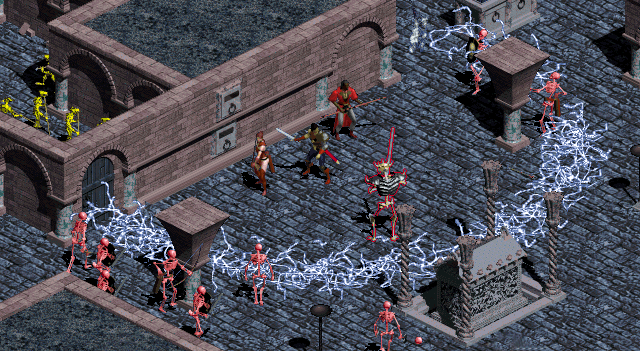
Don’t get me wrong, I love multiplayer. Lurve it, in fact. A memory that still brands itself in my mind is acquiring three copies of the first Diablo and playing it alongside my father (the warrior) and mother (sorcerer) with my rogue (due to friendly fire issues, my mother was often left cursing when another arrow brought a death cry from her sorcerer). When we bought our copies of the sequel, my brother joined in and we had fun terrorizing demons on our LAN. Same happened with Warcraft II, Goldeneye 007, Duke Nukem 3D, and a plethora of other titles.

There remain some games I have no particular desire to play to this day, however. For years I was content watching others play the Resident Evil series. My last roommate loved the Metal Gear Solid series and I had to have seen him play the third one for an obscene amount of hours. This was fairly common practice in my household–watching each other play various adventure games or the Final Fantasy series.

I feel this phenomenon creates an interesting angle into the discussion of games as art.

Not only does one have the artist, art, and interacting agent, but one suddenly has the entrance of a spectator of the interacting agent. Try as I might, I cannot think of this as common in any other artistic practice (I do not commonly watch other people experiencing theater, music, or a piece of art while being one step removed in my experience of the same). The question then becomes whether or not the interacting agent and spectator have different experiences with the medium, and therefore the artists?

Yes.

While the narrative elements, including the bag of character, plot, setting, point of view, et cetera, exist for anyone who on any level experiences the game, there exists the design of the game itself. It feels very different playing a Resident Evil game than watching it (I finally picked up the series this past year). This particular example probably speaks so loudly due to its survivalist horror elements: as a person playing the game, my ammo is much more in the forefront of my brain than it ever was while I was watching my brother or any of numerous friends do the same. While my anxiety would perhaps rise while watching someone else struggle, falling into the same trap produces a new level of anxiousness and palm-sweatiness.

We should remember that there are usually many different types of people working on a game (exceptions apply). The spectator may well get the exact same intent from the writer as the interacting agent. However, like any piece of art or entertainment, it does seem that the primary purpose is to experience the entire production–different elements should feed into themselves or a purpose. Some games do this brilliantly, others less so. When I don’t feel as if I’m wrestling between myself and the controls of a game, I do not spend time overly concerned over the design choices and focus more on the narrative or ludic elements at hand. When things aren’t intuitive (or something to which I can easily acclimate), I feel less satisfied about the experience as a whole, and my concentration breaks.

Satisfaction does affect my view of the entire package. Beyond any cues the interacting agent may give any spectators, the controls may very well not be an issue (unless we’re dealing with the pesky camera). So, does this truly create a new agent which has any relevance in the interaction with this medium, or is this just an interesting addendum to a relatively new media that is rising in prominence? The authorial intent does not include this person (it may, but I doubt it is a concern), but it does create an interesting sense of community.

Especially with games where the spectator may shift into the role of interacting agent briefly. Here I think of games such as Zack & Wiki, whereby having friends in the room can aid the experience. Super Mario Galaxy also has the interesting element of providing a lesser interacting agent who bridges the gaps among those who experience the game in different fashions. It seems an avenue of games that can be more fully explored, and one which may provide an interesting lens through which to view how we interact and experience games as a society, rather than just as individual gamers.

The topic behind games such as Guitar Hero and Rock Band is probably a whole other post much in this same vein.

Speaking of, I may have to find someone to play Metal Gear Solid 4 while I watch.

Tagged , , | 2 Comments

Joey is Hamilton


Joey Comeau writes the hilarious and sometimes heavy-soul-hitting webcomic A Softer World (with photographic help from Emily Horne).

He also has various other side projects, one of which is called i am other people – joey interviews people. Comeau’s most current interview was with Hamilton Chu, a Director of Special Projects for Blizzard Entertainment (and previous producer of Halo and Halo 2). The interview reads more like a conversation, and doesn’t have anything directly to do with Blizzard or its projects (NDA FTW!). So, if you’re expecting more news on Diablo III, Starcraft II, Wrath of the Lich King, or the as yet announced MMO, I’d steer clear.

Otherwise, it’s a pretty compelling read. As pertains to this blog, I found one paragraph by Chu particularly interesting:

But I’m not sure I believe you. Are you saying that if there were no personal glory, you wouldn’t write? It seems like such an integral part of you. Maybe it doesn’t bother me because it’s SO clear where my glory might or might not come from. You’ve had the delightful onus of having read some of my personal work. You were very polite about it, but I have no illusions that it’s some fantastic work. Still, I enjoyed the creation. Maybe it’s that the personal adulation you receive is so much more intense than anything I come in contact with. I mean, it seems like with every update you have fans who literally post within seconds something like, “Oh! Joey! You know how life really is! I loves you!” For us, there are certainly VERY ardent fans of WoW or Halo or what have you, but it feels like it’s on a much less personal level. Your work especially revolves around views on life and love and relationships and self worth – things that can strike very deeply for people. I think that develops a very different relationship with fans than most games do.

Contact with Joey is pretty easy. His LiveJournal often talks of various things that catch his eye (sometimes even contemplating or reviewing games he may be playing), and he frequently posts links to his comics, which fans comment on and often compliment, much as Chu states. There is a very real and direct connection to the artist.

How personal do we allow ourselves to get with games? How about their artists, designers, directors, producers? It’s probably the two examples Chu cites (both of which inspire fans, but in a vastly different way), as I know I have grown very attached to some games, but only to a few of the artists behind the scenes.

As we’ve seen with recent conversations in and about Braid, however, when there are fewer artists directing the scenes, it is much easier to focus on the creator as well as the art. Other times you have people such as Denis Dyack (oh how I get tired of people misspelling his name with two n’s), who willingly throw themselves into the fray.

We’ve seen the other side of the coin recently as well, with the questionable treatment of those who’ve worked on Warhammer Online: Age of Reckoning, but are no longer with the company and whether or not they are receiving credit. Videogames tend to be massive works of art, or at least the ones we most often seem to discuss. It’s useful to remember just how many people may have worked on these projects.

Tagged , | Leave a comment

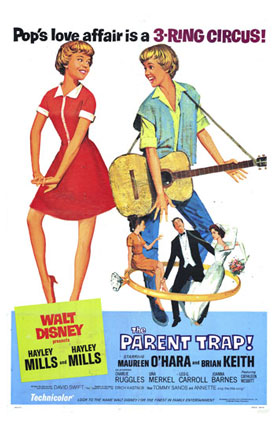
Parent Trap

Today I received this e-mail from Cap’n Perkins:
I’ve got a (responsible not crazy) parent that’s interested in monitoring the types of games her 13 year old son plays. Are there any parent themed gaming blogs I can aim her towards?

My fear is that most are designed like insane watch dog groups that will say any game is bad if it contains even minor mature content.

From my direct recollection, I could not think of any I had come across, though this is hardly surprising. As a non-parent (and one who has little chance of Surprise! Kid! jumped upon him), this is not something to which I pay particularly close attention. I’ve been asked by my own boss suggestions for her fourteen year old son and their recently acquired Wii (No More Heroes did not make that cut), so perhaps starting to compile some more information couldn’t hurt.

Upon arriving home from work I did a very basic Google search and came up with What They Play. It’s a fairly decent site (even if my nape hair rankles at “Games for Girls” and its content), though largely user generated. While this has the benefit of knowing what other parents think, you have to quite often take things with a grain of salt. Not every parent is like you, and the most useful tip I can think of when making decisions is that you know your child better than anyone else–use that knowledge.

I’m also rather dubious of the user generated content when polls like this rear their heads. Somehow, I believe I’d be a vastly different parent than most of those concerned about two men kissing.

My own mother made restrictions based on maturity level, so I was playing Roberta Williams’s Phantasmagoria at a much earlier age than my brother. My mother actually played the game herself, however. Not all parents have an interest in gaming, nor do they have the time.

There was also a page with tips for parents, compiled by the ESRB.

As I watch more and more of my own peers grow bloated with child, it strikes me that I know a lot of people who played or still play videogames. With each successive generation, it is apparent that more parents will know what’s available and what is suitable for children. Less than stellar (and sometimes outright horrible) parents will always exist, but I’d like to believe those that are truly concerned can educate themselves.

As stated over at Versus CluClu Land recently, information on games is quite readily available to anyone wishing to roll back the sleeves and do a little intelligent searching online. Separating the wheat from the chaff becomes a task in itself, but that’s why I’m rather impressed with the above parent’s asking someone she felt might be knowledgeable in that particular area.

I believe gaming is becoming a much more acceptable pasttime, one parents find hard to deny children at the very least. Though Obama might urge parents to put the video games away, I do believe that there can be benefit from most forms of media–in moderation. There is no reason that videogames have to be seen as a metaphor for underachievement. Most of the rather hardcore videogamers I’ve known have been rather bright and done well in school (though this is probably largely due to the classes I myself took).

Good luck, parents.

Anyone else with further suggestions?

Tagged , , | 4 Comments

Gaymer

As I previously posted, being noticeably gay online (or offline for that matter) isn’t necessarily a barrel of laughs. Therefore, whenever I hear someone (e.g. my boss, friends, et cetera) question why people create gay communities in game, I’ve been at somewhat of a loss as to how to explain.

Sites such as Gaymer.org and Gaygamer.net are ones I very infrequently visit, but of whose presence I became aware fairly early on when I stepped back into MMOs in 2004. The following explains quite a bit:

The truth is, in the gaming community, there are some pretty staunchly homophobic players and Gaymer.org is about having fun without hearing the bashing. So I give this site to you as a safe haven where gaming is the focus, not hate.

For this same reason there exist gay guilds in various games. I briefly joined one in World of Warcraft, and then again when I played Age of Conan for a month. Yet, even this can cause some headaches to occur within the games themselves.

What was so different about being in a gay guild? Honestly, not horribly much. I saw the same level of banter and chatter occurring. In Age of Conan I saw some discussion of local Pride parades, attractive male celebrities, and so on. There was also talk of sports, politics, and many other topics which I’m sure you can encounter in any guild chat.

While I personally have a hard time justifying joining a guild due to my sexuality (I have the same problem when making friends in real life–they don’t have to be gay), it was pleasant to see people being willing to chat amongst themselves openly, without fear of having slurs typed at them or being griefed in some manner.

Along with the discussion of games as art, having political messages, and their responsibility to our culture (and our culture responsibly handling them in turn), there are intriguing discussions occurring in race, gender, sexuality, and various other venues. My question remains of how aware most gamers are concerning these issues.

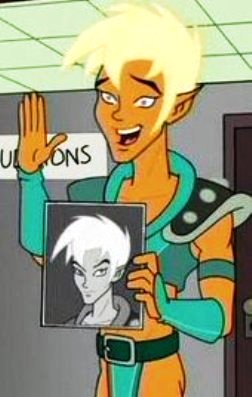
With semi-popular spoofs such as Drawn Together we see a very stereotypical picture (provided above) of a gaymer in Xandir P. Wifflebottom (I cringe as I type that). While I realize it is comedy and supposed to be a parody, I wonder when the joke gets tired (which can be said of the entire series and its cast list). Yes, we know about the overly emotional, hearts on their sleeve ‘queens’ that society has deemed as appropriate queer behavior, but when do we move beyond such?

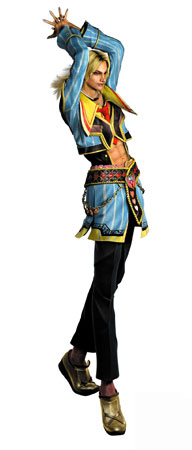
Something of which I believe (and hope) we’ll see more of is the reaction against such bland, blatant stereotypes. Upon the release of Enchanted Arms, I was intrigued at the notion of a very openly gay character in a videogame. Speaking with my gaymer friends, it was curious to see how very few of them actually saw this as a positive. The character screams out his effete behavior (here’s a novel concept, gay does not equal feminine) and seems not much more than comic relief. It is a step forward from having no gay character, but it isn’t necessarily the path that we desire to see trodden.

As with the example of the gay guild in WoW who fought against the ruling that they could not advertise themselves as an LGBT guild, it is reassuring to see that these communities are not only fostering support for those that may seek it, but that they are also voicing their opinions. While online reactions to Makoto seem very mixed, it is reassuring to see some discussion occurring. While playing Age of Conan, my fellow guildmates seemed rather impressed at Funcom’s inclusion of a couple of gay NPCs who were quite normal except for their chosen partner.

Meanwhile everything isn’t horribly doom and gloom. While I may personally find Makoto distasteful and very, very annoying, he is a major character that is openly gay. Much like with Will & Grace, it is something I can begrudgingly accept, even if I don’t personally enjoy it. Just because my personal philosophy is to run the extra mile and overshoot if necessary, a revolution and overhaul does not come by in one fell swoop.

Plus, we have had some nods that aren’t the stereotype that commercial audiences seems to expect. The one that stands out to me most is Quest for Glory V‘s Andre the Fisherman politely declining the flowers offered him by the Hero, explaining the presence of his boyfriend. Seeing as how stereotypes seem to still flourish in many places in the media, however, this might be a battle that takes a while.

Tagged , | 2 Comments

Fanboy, meet Denis.

There aren’t too horribly many things over which I become a fanboy these days. I might squee and awww over a chocobo in a white mage outfit, but I just as easily move on and look at kittens and do the same.


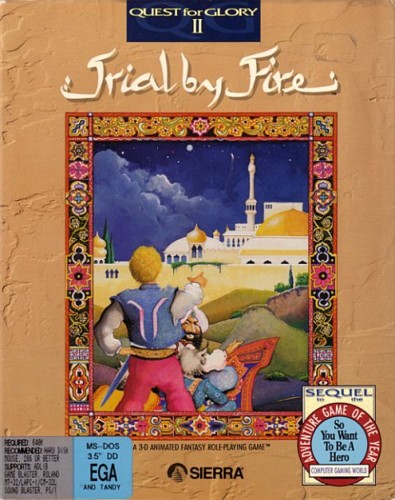
As the name of this blog suggests, however, I am a large advocate of the Quest for Glory series, despite finding something over which to quibble in a previous post. The games really are that good.

If you don’t believe me, I suggest trying it for yourself–for free. AGDI just released the fan remake of the second title, Trial by Fire. Each game was set in a different mythos, this one choosing that of a Middle Eastern flavor. The first was Nordic/Western European, third African, fourth Slavic/Eastern European, and fifth Greek (though certain elements, such as Baba Yaga, found themselves throughout the series). They also had corresponding seasons, though this was somewhat disrupted with the addition of the third game, which was not in the original planning of the series.

I still recall my mother installing all manner of Sierra games on the computer that saw its presence in my room at our first home in Tennessee. Quest for Glory III: Wages of War quickly became my favorite for a number of reasons. While it was probably the weakest in story and gameplay in the series, though that’s hardly an insult (I did love the wizard duel), it gave me the taste of being able to play an adventure game where the puzzles not only made sense and had clear indications on how to be solved, but there were often many solutions to any given impediment. I went back and played So You Want to be a Hero and Shadows of Darkness in quick succession.

Shamefully, I never played Trial by Fire until the promise of the fifth came through the modem. While I grew up on typing based adventure games, it somehow intimidated me as it should not have.

NB: This is not the more substantive post to which I alluded earlier, but fanboy inspired posts won’t come by here too frequently (I hope).

Tagged | 2 Comments

Pop Songs

Warning: Xiu Xiu (pronounced ‘shoo shoo’) is not to everyone’s taste (though this album is perhaps among their more easily accessed), but as they subvert traditional pop songs quite commonly, I feel this video is of interest to those gamers of the video variety:

What amuses me most is that this concept does not seem too horribly out of place. Nor does its difficulty when compared to the old NES cartridges of lore. The song also contains one of my favorite lyrics: When you get to be my age the police don’t assume that you still like to light things on fire, bearing that in mind I wouldn’t trust me either.

Oh Jamie Stewart, you sometimes shrieking weirdo, you. He also wrote a song called Bunny Gamer, about which I will frequently think now that I recall it.

N.B. The plan is to post something of more substance tomorrow.

Tagged , | Leave a comment