Potential spoilers: Dragon Age, The Witcher.

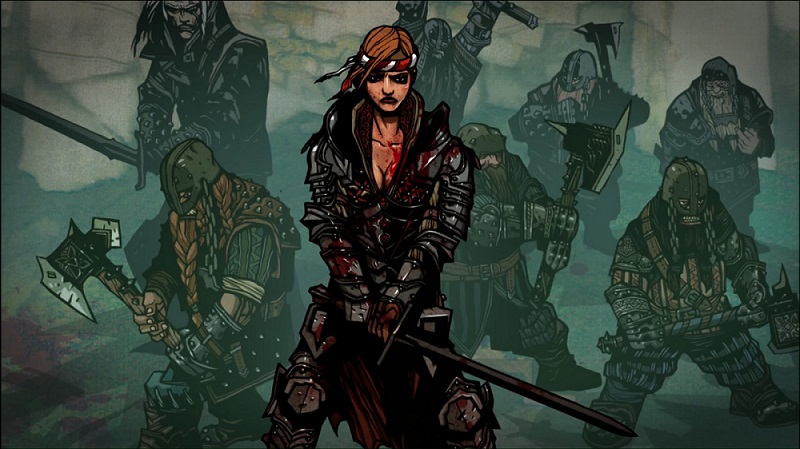
Despite donning a different role in the various games I play, I find that when faced with the option of subjugating someone, or siding with those who hold systemic power, I always pause. Recently replaying the recent BioWare RPGs and The Witcher series, it struck me how I could not side against the Scoia’tael in the latter, nor could I find myself wanting to side against the mages in one of the former. Something in me innately wants to rebel against the notion of further subjugation, regardless of whether it would be part of my character or not.

Rebellious

What seems like a fairly simple observation began when I started comparing The Witcher to Dragon Age, as I have seen many do. There are arguments about better combat systems, a character with whom to identify, a better world, and more powerful decision making. The arguments go back and forth both ways, though that last point struck me as interesting, because there is systemic racism that is apparent in both games. Yet, when I looked at my import from the first Witcher to its sequel, my decisions barely had any consequence. Then I recalled the end of Dragon Age II and realized why that was.

A story that a game metes out is a system in and of itself. The world that has been built is tied into that story (as well as the mechanics for progression; it so happens that in these two franchises, violence is rampant), and the only true way to have any effect is to change that story itself. Importing decisions means that any decision I make in a game will be of limited scope. I can side with the Scoia’tael all I want, but that won’t change the fact of their oppression, or the plight of the various elves and dwarves found wandering that world. In Dragon Age II, it is Anders’s reckless act of blowing up the Chantry in Kirkwall that allows BioWare’s writers to move the circumstances surrounding the oppression of mages forward, nothing that my Grey Warden did in Origins, nor any decisions I made in the sequel.

What strikes me about this is that it is an interesting parallel for effecting social change in real life: until the narrative changes in some significant way, all the work is merely a build up toward it. Of course, in these games, these acts happen no matter what, meaning my choice of whether to be for or against such large-scale changes colors which side I am on and how I would perceive such. Looking at the US right now, depending on how one feels about same-sex marriage, all of the seeming progress that is occurring right now means there are a range of reactions and emotions, based on peoples’ own actions and efforts in that struggle.

Which is to say, my hesitance in siding with the humans against the Scoia’tael has a clear impact in that the Geralt I play would clearly have a role in my mind, and would clearly have a mindset on how to approach decisions (granted, this one is alien to me, which is why I have not gone that route yet, despite some arguments that ‘both sides are just as bad,’ which is an argument at which I reflexively roll my eyes).

These are games that are built on decisions, and people seem disappointed when the decisions do not lend themselves to larger changes that carry over from game to game, or even from decision to decision in the same game sometimes. But, if we allow ourselves to inhabit the characters that would make such a decision, it does allow for a narrative to be constructed. These types of games are a collaboration of the players’ imaginations and reasons with the story being told.

Posted on by Denis Farr | Leave a comment

2013 Into 2014

I’m not writing as much as I once did. This is partly because 2013 has been a transitional year for me (having a job that pays well and has regular hours, many different circles of friends, and a boyfriend), and I’ve found I am less satisfied with the same-old. Therefore, it’s not wholly surprising to find most of the writing of which I am proud this year can be found in little odd side projects.

1380330_577566111186_81956165_nTake, for instance, my work with re/Action this year. I wrote about the question of historicism (heavily influenced by my professor Dr. Rhoades) about what are the stories that are passed on to us in games, and how much can we trust them in terms of their authenticity. Who is telling us this story, and what stock do we place in this? For the most part, so far, we’ve been able to trust our narrators (the exceptions burning a brand in our mind, the likes of which we blazon on t-shirts, blog posts, and memes).

The second instance hits more close to home, as I explain being an ethical slut and and explaining how I am in an open relationship and how I am disappointed at what being a slut in games typically means. At a certain point I stopped counting the number with whom I slept. When I went in for a recent STI screening, I answered, “More than 100 and less than 500” in the number of people with whom I slept with last year. I take my precautions, and they have worked for me so far. More importantly, the people with whom I’ve slept have been people, not just another notch in my masculinity, straight-acting or otherwise.

There was also my contribution to Five Out of Ten, which served to highlight my thoughts on gender and how I explored games in their earlier days (for me, in the late ’80s and early ’90s).

Further, in Memory Insufficient I discuss how the idea of families in a heteronormative context can fit for some queer ideals, but when introducing queer characters, brings up the idea of non-heteronormative methods of passing on culture and tradition. This was raised in part by the successful funding and acceptance of the Massive Chalice Kickstarter (which I did back).

Lastly, I contributed to Ghosts In The Machine, which was a collaborative creative exercise exploring what questions the digital game space opens us up to in terms of larger questions. My own was the ethics of forced-upon violent rhetorics: whom they serve, and what they seek to enterprise out of the audience to whom they speak. I’m not sure whether or not I was successful, but it does beg the question of further exploration among game-like themes.

Surprisingly, for the first time in many years, I played a number of newer releases, about which I would love to share further thoughts, but rest assured I am currently working on a further explication of Gone Home (which I named my GOTY for Sparky Clarkson), and another short story. Whether or not I am ever as prolific as I was before (however sparse that may have been), I hope to still be around and offering.

Posted in Uncategorized | Leave a comment

HRC’s Branding Attempts

Right after the recession hit the media in a big way, the company for whom I was working shrunk the design department with which I was working. Taking the opportunity to pursue something about which I was passionate, I decided to try out my hand at canvassing, and one of our clients was the HRC. This was right around the time of Prop 8, and the issue at hand was marriage equality. Not for Prop 8, but the issue as a larger whole.

One day while out at the University of Chicago campus, one of my fellow canvassers was accosted by some activists, demanding to know why the HRC would demand money for LGBT causes considering they were abandoning the T in that group? While my coworker sputtered, flabbergasted, I watched on, having known this, but realizing I could not continue with this work, for this particular organization. I did not go back the next day.

I am torn about today.

My Facebook feed (moreso than my Twitter feed) is awash in red equal signs, the branding that the HRC uses going under a color switch in order for people to signal their support of marriage equality as it is being heard in the Supreme Court. I do support marriage equality. I do not support the HRC. When I mentioned this on Twitter, an exchange occurred whereby Courtney Stanton brought up this article explaining the issues the trans community has with the HRC (and with much of what happens in the gay and lesbian movement overall). I won’t rehash the article because it is worth your full attention and a full reading.

I also find it hard to argue for the HRC’s branding in this issue considering they were against the ruling taking place in the first place. To my cynical mind, this reads as a way to pursue more brand awareness, thereby increasing their ability to fundraise in the future. I see no reason not to be cynical with the HRC. This could very well be their gamble to make the best of what they consider a bad situation, but it one where I find using their branding rather counterintuitive for promoting queer issues overall.

What people do with this information is up to them, and I am not trying to create a ‘queerer-than-thou’ hierarchy, but feel people should be informed.

Posted in Inclusiveness, LGBT | Tagged , , | Leave a comment

Five Out of Ten

I don’t know how to pitch. While I have pitched articles in the past, successfully and not, I have found that what usually ends up being sent out reads more like a personal note, introducing myself, and talking about something about which I am super excited. As someone who has never made a successful living wage off writing, I honestly cannot ascertain whether this is an appropriate approach (given that my pitching and writing have often been delayed by both a lack of self-confidence driven by depression), but since my work was recently featured in Five Out of Ten, I figured I would give some insight into what I pitched there, as I find the topic itself fascinating.

So, if you are unfamiliar, Five Out of Ten is a magazine about the culture surrounding games, interested in critical talk about not only the games themselves, but their fit into the society in which they live. From my understanding, it’s aimed to give someone who’s not very familiar with games an entry point for discussion and food for thought. I cannot say whether it’s been successful, largely because those who are my friends and to whom I introduce such to, even if they aren’t people who play games, are interested in that discussion already, and have a place from which to engage.

So, as to what I pitched:

Hello!

My name is Denis, and I have been writing about games for a few years. Below please find a representative sample of my work (which should tell you more about me than any words I could put here):

With the Galaxy in Flames, My Video Game Hero Finally Came out of the Closet
Kotaku

Queer Characters: BioShock
GayGamer

Pokédrag
Gamers With Jobs

The last of those is perhaps of most interest, as I wish to write a feature exploring what exactly gender means in a digital world. When we are given the choice of choosing our character’s creation, gender does find its way there, and it limits us in interesting ways that tell us quite a bit about how we view gender itself. Which is a bit daft, isn’t it? Excepting a few games (and of particular, recently), the gender really seems to have little to no effect. I don’t ever see my digital penis, vagina, or whatever genital configuration I may have, and yet it seems my gender and sex must always align, yet when I am asked my gender, it always refers to my sex. So it seems a bit silly to make me go through these rigid gender binaries.

Which is why I want to write a piece not only exploring gender in a digital age where my genitals don’t matter, but to take it a step further and look at how this systemic boundary frees me in how I can view sex and break those definitions entirely. Who says I am a woman? The fact that I say I am? So do drag queens, and I would write a diary-like feature from the perspective of a drag queen and king (why should only one gender have all the fun?) going through a few character generators, making pointed comments that hopefully illuminate how much symbolism we put in even the most physical of attributes we give our characters. Ideally, it would make a larger comment about how our genital configuration only matters in the rarest of circumstances (depending on how much one enjoys sex with varying partners), and that the entire face of gender should be however the person wishes to express themselves, and how games offer a perfect teaching moment.

The types of games I wish to explore would include at least one MMO (I am thinking either Star Wars or Guild Wars 2), one RPG (one Bethesda and one BioWare, preferably), and then Sims 3. The idea would be to keep it light and entertaining, free of jargon, but still making an overall point of the entire idea of coding gender is very telling of how we see gender in real life, despite the fact that it can be as mutable as sex for some people.

My piece did not really end up like the diary I imagined. One, I had done it with Pokémon and as Erik Hanson of Gamers With Jobs can attest, that was often not on time because it required not only my critically thinking about what I had encountered in the game (viewed through a lens of subverting gender), but treating it as a creative endeavor. Two, the second piece I was being asked to write asked me to contemplate a current issue in games and offer a Player’s Guide, so to speak, to understanding the issue. My pitch for that?

The current games landscape is no the games community with which I grew up. I grew up playing games with my mother, and all of her online friends, who were women, black, gay, bi, and every stripe of diversity you could imagine. We did not call each other faggot, we supported each other, and when I came out, my first forays into such were in an MMO, because I felt safe (further making an argument for MMOs as a place to discover our identities by reinventing ourselves). Depending on how personal a piece would be acceptable, I could trace my interactions with online games, from BBS staples, to MUDs I later dialed into, to the earliest MMOs and how that progression has changed over the years.

This took MMOs out of the consideration of my main piece.

Now, it just so happened that I managed to win a copy of XCOM from Bit Creature around that time, so it was heavily on my mind, especially as I did end up playing it using drag conventions. My male soldiers were named after female games people, my female soldiers named after the male games people. It being fresh on my mind, I used it as a jumping off point, then referenced my experiences with Pokémon, and continued on with The Sims and making larger statements about gender and beauty constructs in games. I addressed both men and women, largely because while I can speak about how we sexualize women, I know from experience how the ideal male shape has shaped my own perceptions, especially as someone who sees his presentation ranging the gamut from butch to femme and places beyond quite frequently (the author picture I provided Alan can be used for reference).

The second piece came out pretty much how I expected, however. In some ways, it feels like pieces I’ve written before, but weaving them together and making an argument from a different angle. EA recently had an LGBT meeting where they discussed, among other topics, how toxic the online environment can be. It’s honestly what keeps me from many games, because I have no patience for others’ obstinance and poor behavior. Therefore, while I discussed gender, and my own love of playing around with it, the second piece is far more personal, as someone who grew up as a teenager playing various games in the BBS/MUD/MMO space. I love the genre, and yet I hate what it can become.

So, there you have that pitch. I like what I wrote, and I feel glad to be featured along some truly excellent pieces (honestly, I had never thought specifically that way about fate, videogames, and tragedy; we do need more pieces exploring gender and sexism in series like Silent Hill; and there’s plenty more to munch and chew on). If you’d like a copy, please go ahead and buy one; the funding model is such that the contributors split the proceeds (minus operation costs), so in a way, you’ll be directly funding my work.

Thank you!

Posted in Criticism, Inclusiveness, LGBT, personal | Tagged , , , , , , | Leave a comment

2012 Year in Review

2012 has been among the worst years I’ve ever faced, though I feel it saw some of the better writing I’ve ever produced. Considering 2011 ended with the publishing of This Gaymer’s Story” both here and Kotaku, and was basically me making an impassioned argument, it was fun to explore other avenues of my writing as well (though a few incidents required my writing those impassioned arguments as well). I suppose the big thing about 2012 was finally moving away from GayGamer, a drift that had been occurring over the last year, as well as writing for quite a few new outlets.

So, in case you missed it:

With the Galaxy in Flames, My Video Game Hero Finally Came out of the Closet” was published on Kotaku after I finished Mass Effect 3. I won’t get into arguments about the ending because I didn’t care. The game’s story for me was my Shepard coming out and then dying.

Working with Alyssa Rosenberg at Think Progress, I looked at DC’s new ‘gay’ Alan Scott Green Lantern, only to find it absolutely disappointing in how insulting and unimaginative it was.

I played Analogue: A Hate Story, and consider it one of the best experiences for me this year. I also wrote about how through the experience, my silence felt a poignant reminder of the themes of the game over at Medium Difficulty.

In 2011 I started a series where I played as a drag mother through the Pokémon series, which Gamers With Jobs was kind enough to host.

The favorite review I wrote this year remains this one for GameCritics about Endless Space.

Over at Gameranx, I wrote about the Skyrim’s Falmer, and how their narrative in the game disturbed me and showed a systemic silencing and sense of violence.

Oh, Papo & Yo. First, there was this piece at Gameranx about how if one could step back, it does well at showing violence perpetrated against anyone considered in the minority. Then there was this piece for Gamercamp where I had an opportunity to interview Vander Caballero.

I also started writing for Unwinnable, a suggestion of Jenn Frank’s. The first piece that resulted was a stream of consciousness thing about Dinner Date (which I really, really enjoyed).

Beyond such, I also released a board game. I haven’t received much feedback, so my assumption is you haven’t played it, or feel like not hurting me feelings. Please give Love Life a try and give me some honest feedback.

For this next year? Some new types of writing in my immediate future. Also, more games criticism and reviews. Also, I am working on a drag queen deck building game that I will further outline soon.

Here’s to 2013 being better than its immediate predecessor.

Posted in Year in Review | Tagged | Leave a comment

Drag On!

This summer my friend Stephen and I were playing a lot of deck building games. As I was finishing Love Life (which you’ve played, of course), it occurred to me that it would be fun to tackle a deck building game myself. I find the genre rather amusing, and quick and easy for newer players to pick up (though, naturally, the strategy takes a while to master). It also opens itself up to playing with the mechanics to get across certain points, much as I remarked that Miskatonic School for Girls does with its sanity tracker: everyone loses, the point is to be the one surviving the longest.

Which is to say, Stephen and I have been working on what we’re calling Drag On! for now. A deck building game about drag queens, where each player starts with a drag mother and various accessories, and from there starts to build her own drag family out of the queens available to them. I’ll get into more specifics about the gameplay in a later post (largely because I’m still testing and tinkering to see what does and does not work), but for now, I figured I would give a taste of the queens you will be meeting.

The drag mothers:

  • Beaver Arthur: an elderly white queen with a sharp tongue
  • Queen Beach: a plus-sized Hawai’in queen who loves surfing
  • Simone de Boudoir: a black French queen who idolizes Josephine Baker
  • Ricki Martini: a pop-obsessed Latin@ queen from Puerto Rico

Then the queens they can assemble into their houses:

  • Lilith Darling: Korean queen who is hairy and lithe, and loves school girl outfits
  • Victoria Cumbersnatch: a posh British queen in a wheelchair
  • Wilhelmina One-Eye: a plus-sized lewd Somalian queen with an eye patch
  • Sherry On Top: this plus-sized Latin@ queen is a bit older and hails from Florida
  • Polly Partin’ Thighs: it’s fairly easy to imagine whom this white Tennessean gal idolizes
  • Ginifer Beefeater: a lush Pakestani queen from the UK
  • Panic Pixie Girl: a hipster black queen hailing from Portland
  • Edwina Wood: elder white queen who loves those old horror movies
  • Zelda Cutie: hailing from New York City, this black queen is obsessed with the roaring ’20s
  • Pretty Hate Marlene: a Chinese queen who rather adores the ’90s industrial scene
  • Sis Boomba: this Latin@ queen from Argentina does an interesting cheerleader nun mix
  • Frida Callme: hailing from Mexico, her patented look is the unibrow and mustache
  • Ruby Rodless: this Haitian queen does love sci-fi movie cosplay quite a bit
  • Brigid Ten Inch Baum: this Jewish Bostonian queen loves her some BioShock and videogame cosplay
  • Jenuwine: this black queen from D.C. loves that soulful R&B
  • Girlface Thrillah: hailing from New York, this queen is off and on with the PuTang Clan

The goal is to provide you, the possible players, with a more in-depth story of these queens in the coming weeks. Keep an eye out!

Posted in Drag On | Tagged , , , | Leave a comment

Food Challenges

On the one hand, I have been excited to see the various mayors of cities taking on the challenge of limiting their food budget to what someone on food benefits would receive. It’s a valuable lesson for them in how people actually do (barely) live. Then on the other hand, the more I think about it (and a sharp comment from my friend Ronia when I praised Cory Booker for trying this), the more uncomfortable I become with the idea.

Privilege is a very odd thing, and having a lot of education about nutrition and food will give anyone a boost on this challenge that many who are in these poor situations do not have. We do not easily teach about nutrition and food and how to obtain such inexpensively. As I alluded to in my last post, despite the fact that my mother does know quite a bit about nutrition and has even taken courses on it, when my family was barely keeping a roof over our heads and without electricity, our meals were crackers, tomato sauce, and later ramen, when a friend lent us a grill on which we could heat water.

Sustained lack of access to decent food creates a despair that is not quite tangible within just a week’s time, which is part of what makes this challenge almost meaningless in the long-run. It gets a basic idea across of how difficult living with very limited means is, but gives no insight into the longer term effects it has on either the morale or day-to-day functioning of individuals: decreased energy, a desperation that often threatens to choke a person up with tears or quiet rage, and poor decision making based on the short-term solution of getting any type of food into your stomach.

What really starts to annoy me about this entire affair is that we don’t actually listen to the people living on these food benefits as to what their needs are. Instead, we must discount them until some affluent person comes by, tries the challenge, and validates their lived experience. You see, they might actually be too ignorant to actually know what they need. It is this mind-boggling classism that continues to bog down our society, even in very subtle ways.

Of course, this continues to be an issue that we, as a country, refuse to acknowledge when we only talk about building the middle-class, never mentioning how we will help the poor, whose resources are very rarely enough to get them out of their situations these days. Food is just one of the many resources to which they have a more limited access, and to which we have a very odd attitude.

This is purely anecdotal, but when I worked at Whole Foods, I was quite often surprised (and enraged) when a customer would snark at someone when they were using their LINK card to shop at Whole Foods. As if it was a waste of their money to obtain fresh produce that they could not necessarily obtain on the south side of Chicago. Even when people do attempt to make more nutritious decisions, there is a class of people who see that as people stepping beyond what they should have, as if poor people should have to eat whatever is available, instead of being able to make decisions.

Which is not to say that I necessarily fault people like Cory Booker, who are trying to make a difference in some small way. I would instead like to see him attempt this food budget for a longer period of time so that he can better understand the trials that are actually present, where time starts eating away at the fact that he does have an easy out when he decides he quits the challenge. He has a built-in hope that many people simply do not have access to in any way. For me, it just underlines how we disrespect a large, and increasing, swath of people just because of their economic status (even when we say we are trying to help them).

Posted in Politics | Tagged , , | 2 Comments

Daniel & I

It is moments after I’ve conducted an interview with Vander Caballero, and I stare at the phone in my hands, silently weeping. As the tears track down my cheek, I absently wipe at them with the back of my hand, sighing in disgust as drops starting splotching my glasses. The last portion of the interview was an offer of help: if I needed to discuss my own father, I just had to pick up the phone and call. Caballero insisted he could be an ear for my own words, he would be the interviewer as I waxed on about my own life and how it has shaped what I’ve created of it.

It is moments after I’ve finished the story Papo & Yo has to tell, and I slowly look back and forth from the television to the controller in my hand, which is clenched around the controller not in grief, empathy, or mourning for the similar past I have experienced, but in anger.

PapoAngry

It is a handful of minutes after I hear the phone ring at an obscenely early hour of the morning, a time when the sun has not risen, and the only people awake are stumbling home from the bars. My mother is yelling, grabbing her keys, and is out the door, running barefoot to the bar across the street, where my father has pushed my brother through glass and is punching him as a piece of glass cuts his eye.

It is a blink and then I meow, my father standing across from me right after I’ve loaded the last of my luggage into the car. He does not realize it, but those are the last ‘words’ I will speak to him (he always hated it when I meowed). He thinks my German weaker than it is, and he didn’t realize that I understood perfectly well that he was talking to his mistress yesterday, a woman he met while getting high with the uncle who serves as the inspiration for my middle name. 2005, and I am headed off to my senior year of college, where I will eventually be part of a documentary of the different types of lives that walk across Wabash’s campus.

It is half an hour or so after the screening of Thy Loyal Sons, said documentary, and a gentleman asks if the director meant to show me in such an isolated light, or if I perhaps did feel isolated on the campus. I mumble some response about my family living on another continent, though not mentioning it is due to economic hardships. I don’t mention the alcoholism of my father’s that thrust my family into poverty and made me feel an outcast in a high school of mostly upper middle class and upper class teens. I was just busy, I proclaim, hoping to deflect any more insight into my loneliness.

It is a few months after I placed that call to Caballero and due to professional courtesy, I feel I cannot call that number. I do feel I need help, but it’s all connected, and my father is only one of those aspects. I realize Papo & Yo does and does not tell my story; it tells only a small portion of it.

It is a few seconds after I wake up in the dark. We have been living without electricity for most of my senior year in high school and I hear my parents fighting in the other room. The question is whether foods or cigarettes will see the last of the money in the bank account used. I think back to the crackers and tomato sauce I had for my last meal and debate whether or not I wish to have that meal again. My father is not an alcoholic — not only an alcoholic. My father is an addict.

It is an hour since my boyfriend has fallen asleep, and I carefully try not to toss and turn so that he stays asleep. I have been thinking about writing this piece all week, trying to exorcise whatever demons I can to hopefully put me in a more ‘positive’ mood, wondering if it will really turn a year of unemployment around and make things work this time. I wonder where the phone number to call to get my life back on track is. Slipping out of bed after kissing said boyfriend on the forehead (and gently meowing at him, imagining the ghost of a smile he’d give me), I sit to write a blog post.

Posted in Papo & Yo, personal | Tagged | Leave a comment

Let’s Discuss: Apologies

Oh no! Suddenly your social media feeds and inbox are full of irate people peppering you with accusations of being insensitive, a bigot, all because you used a sexist/racist/homophobic/transphobic/etc. word, image, or phrase. What do you do?! Fret not, I will go through a list of actions you should take and avoid.

DO: Apologize
“I am sorry for <insert thing I did/said/insinuated here>.”

DO NOT: Shift
“I apologize if I hurt or offended you.”

Why?
It may come as a surprise, but people are not always collectively unintelligent. Indicating you are apologizing for offending shifts the blame on the people to whom you are offering the apology: “I would have gotten away with it if it wasn’t for those knee-jerky, want-to-be-offended kids! Ooooo!” Instead, apologize for what you did, which can help the conversation move forward.

Note, the longer this process takes, or the more steps you toss in along the way to an actual apology, the more difficult it will be for some to take the apology seriously.

DO: Understand and listen
The world is a big place. You do not know everything. You will make mistakes. When someone is angry, try and listen to the words they are saying.

DO NOT: Think you understand
Making assumptions about what people are saying, rather than actually listening, can cause problems. If you receive a variety of complaints, take a moment to look into the common underlying themes, try searching the internet for resources, and learn what it is that went wrong.

Why?
Very few of us are perfect. When I was a freshman in college, I said some pretty heinous things to a black friend of mine regarding Egypt and its ancestry. I was just parroting back what I’d learned in school, and only a year or so later did I educate myself enough to learn of the historical significance of discounting Egypt as part of a rich narrative of black accomplishments — a tactic often used to belittle African Americans as ‘obviously’ inferior, as they had no culture that was noteworthy.

I felt like a tool. My friend was incredibly patient, and when I apologized, and explained why, he was glad that I had learned from the experience and that I had taken the initiative to educate myself (largely because he realized sometimes we have to come to something ourselves, and he didn’t want to argue over this — it was not his responsibility).

DO: Show consistent actions
It’s difficult, but once you’ve made one mistake, people will look out for others. If you take what you hopefully learned and make sure to educate anyone else on your team about this, slip-ups may still happen, but you can easily and quickly rectify course on the matter in the future.

DO NOT: Apologize and go do it again and again and again
Drat! We totally just did the same thing again a month later. Oh no, now we’ve happened to do this wrong! It’s a cascade!

Why?
Just because you apologized, someone does not have to accept it. By showing consistent actions, you can help repair any harm done. The focus is not necessarily to make sure everyone likes you, it should be to do no harm. That person who won’t accept the apology may never come back, but you can make sure you do not replicate that instance.

Also, whether unfairly or not, the internet is a place that can dredge up past mistakes. If you’ve been suffering foot-in-mouth disease multiple times over a short period of time, it will be that much easier to bring up past mistakes and transgressions. Remember that bit about learning? Please go look over that again.

Again, we all make mistakes. The question is whether you genuinely apologize and see what you did as wrong, or if you dig in your heels and alienate potential customers, friends, users, or whatever your case may be. While the impetus for this is the numerous game companies I’ve seen this apply to, I believe it is much more general than that.

Posted in Community, Inclusiveness, Politics | Tagged , , | 1 Comment

Love Life Released

Content Warning for HIV/AIDS and related deaths.

For a while now, off and on I’ve been working to create Love Life. This was an idea that grew out of one of Corvus’s Blogs of the Round Table, back in 2009. I keep coming back to it to tweak it, but international moves and not-nice recessions have made it something that almost feels a luxury to spend time on in any way (on the other hand, I get excited about people playing it). It was played once in 2010, though the approach was less than serious, and I have made some tweaks since then.

For the past month, I’ve been tweaking it more and more, and having various people test it and report back to me. I cannot promise this to be the final version (as I see how people tweak it themselves when more people play — I do hope people play it).

Without further ado, here are the instructions (and its new, permanent home is here):

So, what you need to know:

First, this is a game that requires storytelling. If such makes someone with whom you are playing uncomfortable, or if they are not the type to want to engage in such in front of other people, please be aware that it may make the experience not as engaging.

Players: 2-6, split off in pairs. You will be playing couples. Choose who you are (i.e. student, CEO, politician, activist, vagabond, criminal, etc.), how you relate to your partner, and then get ready. I would like you to try it with non-fantasy people.

Necessary components: These rules. The board (to be printed, at the bottom of this post). A d6. Tokens for each player.

Setting
: Between the 1980s and ’90s. Pick anywhere from 1981 to the end of the millenium. Can be anywhere, but all couples are in the same geographic location.

Gameplay
: You are telling a story. The goal is not to win, but to tell your story. The game ends when everyone has told the story they wish to tell.

Rules:

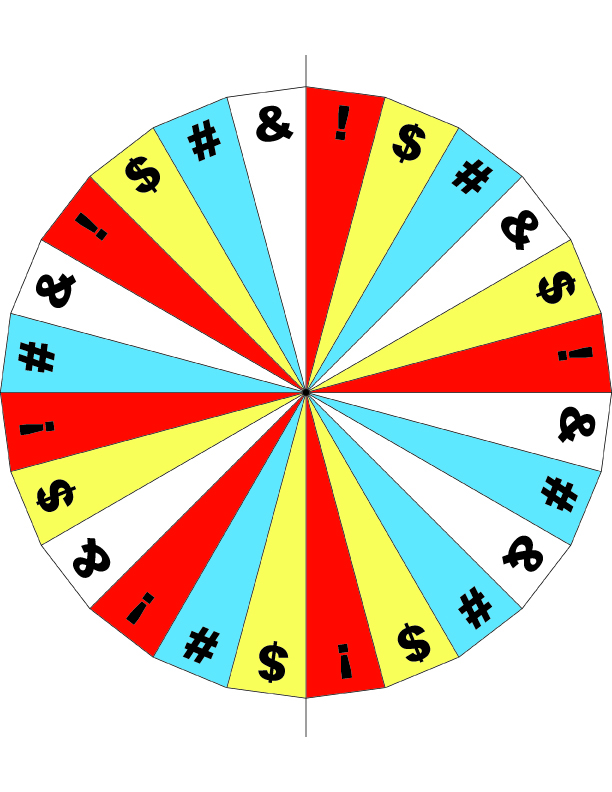
Start: Everyone starts at the top of the board (the board has two lines that extend: choose one to be the top). The board itself indicates time passing. The right half can be morning to noon, the left can be noon to evening — use this to help guide your storytelling, though you do not have to rely on such.

On your turn, one of you will roll the d6, which indicates how many spaces your couple will move (move both tokens). The color you land on indicates what this part of your story will be about (you decide whether it is positive or negative):

White (&): Relationship-oriented
This can be a date, anniversary, sex, conversation — something that tells the story of your relationship. Does not need to have both people be active participants equally (can be jealousy, neglect, surprise gift, marriage proposal, etc.).

Blue (#): Education-oriented
This is general knowledge gathering or education of some sort (is one of you in school, perhaps?). Training of some sort, a class, etc. You can do this together, or individually.

Yellow ($): Wealth-oriented
Anything to do with money. Inheritance? A raise? Pay day? Money woes? Bills?

Red (!): HIV/AIDS
A chance for one of you to test positive for HIV. Upon landing on this space, roll another d6. If you roll a 1, choose on of you to test positive. From now on, when rolling to move, the partner with HIV subtracts one (1) from the roll and moves separately from their partner. If a 1 is rolled, they do not move.

The rest of the journey for this couple is the time period during which the one partner develops AIDS. You will often have two different space colors, so can mix and match how your stories are told together, or tell them separately. From now on, when landing on a red space, roll the d6 again to see if the other partner tests positive for HIV as well. This partner does not have the same movement changes.

Once the uninfected player passes their partner, the lagging partner dies of AIDS complications. Once this occurs, the partner is alone on the board. The players can decide if they have a new partner, or continue solo.

Additional rules:
When landing on the same color, and on the same half of the board as another team, you are encouraged to join in on the story the first couple told. Be creative. Do not try to ruin their story: add to it. (For example, if the previous couple had some adventurous sex, one of you could have spoken to the other couple about it, and wants to try it with your own partner. Or you could be all in the same restaurant on a double date.)

Board:
Below find both an already colored in version of the board. If you feel adventurous, you can color your own board, using your own symbols, or the ones I have outlined in the rules.

An already colored board for you to print out.

Blank Love Life Board (PDF)

If you have any feedback, or wish to relate the story you told, I’d be happy to hear it!

If you appreciate the experience, a donation would also be lovely.

Posted in Love Life, My Games | Leave a comment